

Does Laser Cleaning Damage Metal? Why the Process Is Safe
Laser cleaning removes rust, paint, oxide, and residue while preserving metal surfaces through controlled, non-contact cleaning.
Many manufacturers considering a laser cleaning machine ask the same question: does laser cleaning damage the metal surface?
Under correctly selected parameters, laser cleaning can remove rust, oxide, paint, oil, carbon deposits, and industrial residue while protecting the underlying metal. The non-contact process provides a controlled alternative to grinding, abrasive blasting, and chemical treatment.
Laser cleaning does not depend on abrasive contact or continuous material removal. Controlled laser energy interacts mainly with the unwanted surface layer, allowing the base metal to remain intact.
The result is a precise, repeatable, and environmentally cleaner surface-treatment process suitable for manufacturing, maintenance, welding preparation, and component refurbishment.
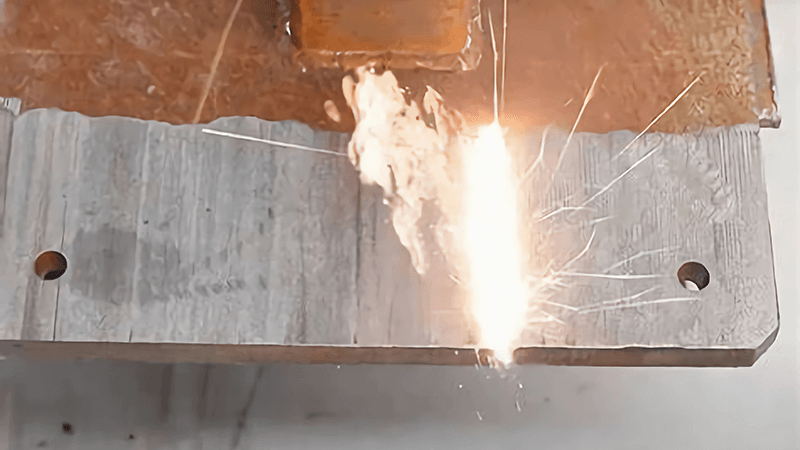
How Laser Cleaning Works?
The core principle of laser cleaning is selective absorption.
Lasers used for industrial cleaning usually operate in the 1064–1080 nm wavelength range. Different materials absorb this wavelength at very different rates.
Materials with high absorption rates, such as rust, oil stains, and paint, will rapidly heat up, expand, and vaporize within a very short time. When irradiated by a laser, these materials instantly absorb a large amount of energy, leading to rapid temperature increases that cause expansion, vaporization, ionization, or detachment from the substrate.
Meanwhile, the base material has a low absorption rate and heats up slowly, such as steel, aluminum, and copper. Therefore, during the extremely short duration of a laser pulse—such as on the nanosecond scale—energy is primarily absorbed and removed by the contaminants on the surface, while the temperature rise of the base material remains minimal, thus protecting it.
Why Laser Cleaning Does Not Damage the Base Metal?
Laser cleaning works through selective energy absorption. Rust, paint, oxide, grease, and other contaminants absorb laser energy differently from the metal underneath.
When the correct energy reaches the surface, the unwanted layer heats, expands, separates, or vaporizes before the base metal is affected.
A laser cleaning machine operates within a controlled process window. The energy is high enough to remove contamination but remains below the level that would alter the metal substrate.
The laser beam also moves continuously across the workpiece. The short interaction time limits heat accumulation and prevents prolonged heating of one location.
Laser cleaning therefore removes the surface layer rather than grinding away the workpiece.
Non-Contact Cleaning Protects the Original Surface
Mechanical cleaning methods depend on physical contact. Grinding wheels, wire brushes, abrasive media, and blasting particles can remove both contamination and a small amount of the base material.
Repeated mechanical cleaning may change component dimensions, round sharp edges, create scratches, or produce an uneven surface texture.
Laser cleaning is a non-contact process. The cleaning head does not touch the component, and the process does not apply mechanical force to the workpiece.
Non-contact operation avoids abrasive wear, grinding marks, pressure-induced deformation, and damage from blasting media. The process also reduces the risk of altering component dimensions.
Non-contact cleaning is especially valuable for molds, precision parts, welded assemblies, thin sheets, machine components, and surfaces with complex geometries.
Can Laser Cleaning Safely Remove Rust?
Laser cleaning is highly suitable for removing rust from carbon steel, structural components, tools, machinery parts, automotive components, and fabricated metal products.
The laser energy acts on the rust layer, causing corrosion products to break apart and separate from the steel surface. The steel substrate remains protected because rust responds to laser energy differently from solid metal.
Compared with manual grinding, laser rust removal requires no abrasive contact, grinding wheels, blasting media, or chemical cleaning solution. The process can clean selected areas, corners, and complex contours while producing less secondary waste.
After rust removal, existing corrosion pits may become visible. The corrosion created the pits before cleaning, so exposed corrosion damage should not be confused with laser damage.
Laser cleaning reveals the actual condition of the component and allows more accurate inspection of the underlying metal.
Is Laser Cleaning Safe for Stainless Steel?
Laser cleaning can safely remove weld discoloration, oxide, light rust, oil, grease, paint, and production residue from stainless steel.
Pulsed laser cleaning provides good control when a stainless-steel surface has a brushed, polished, matte, or decorative finish.
The operator can adjust energy, scanning speed, and cleaning width to remove the unwanted layer without mechanically grinding the stainless-steel surface.
Suitable applications include stainless-steel tanks, kitchen equipment, metal cabinets, food-processing machinery, welded frames, decorative panels, tools, and molds.
A sample test can establish the ideal settings when a specific gloss level or brushing pattern must remain unchanged.
Laser Cleaning Compared with Traditional Cleaning
Laser cleaning offers a different approach from grinding, sandblasting, and chemical treatment.
Manual grinding uses abrasive discs and depends heavily on operator control. Sandblasting requires blasting media and provides less control over a small selected area. Chemical cleaning requires handling, storage, and disposal of cleaning agents.
Laser cleaning uses no mechanical contact, requires relatively few consumables, and provides accurate control over the cleaning area.
The process also produces less secondary waste because the laser cleaning machine does not require large quantities of sand, water, or chemical solution.
For manufacturers concerned about surface protection, production repeatability, and consumable costs, laser cleaning can provide a practical long-term solution.
Conclusion
Laser cleaning can remove rust, oxide, paint, oil, and industrial residue without damaging the metal surface.The selective, non-contact process protects the base material because laser energy is directed toward the unwanted surface layer. No abrasive tool presses against the component, and no blasting media continuously wears away the metal.The combination of correct equipment, suitable parameters, continuous scanning, and representative sample testing creates a stable cleaning process that preserves the metal substrate.Laser cleaning is therefore not only an effective removal method. Laser cleaning is also a controlled surface-protection solution for modern manufacturing and maintenance.
Explore Huawei Laser Cleaning Solutions
Huawei Laser provides handheld laser cleaning machines for rust removal, paint stripping, oxide cleaning, weld preparation, mold maintenance, and industrial surface treatment.
Huawei Laser can help evaluate the appropriate cleaning solution based on the metal, contamination layer, surface requirement, cleaning speed, and production volume.
Explore Huawei Laser products or contact Huawei Laser to discuss sample testing and laser cleaning requirements.