
Robot Welding Machine for Machinery Manufacturing Applications
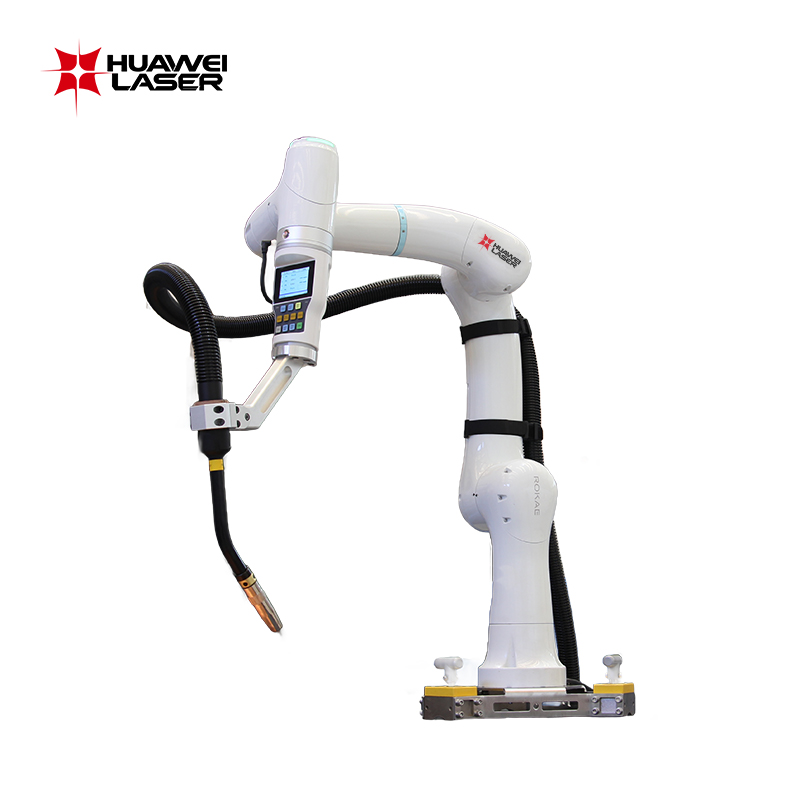
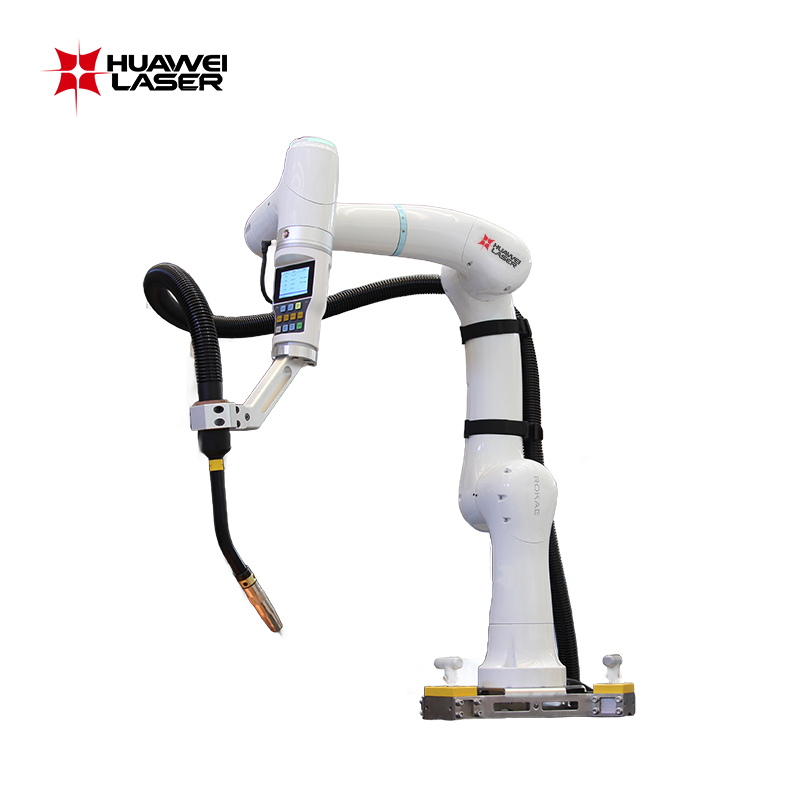
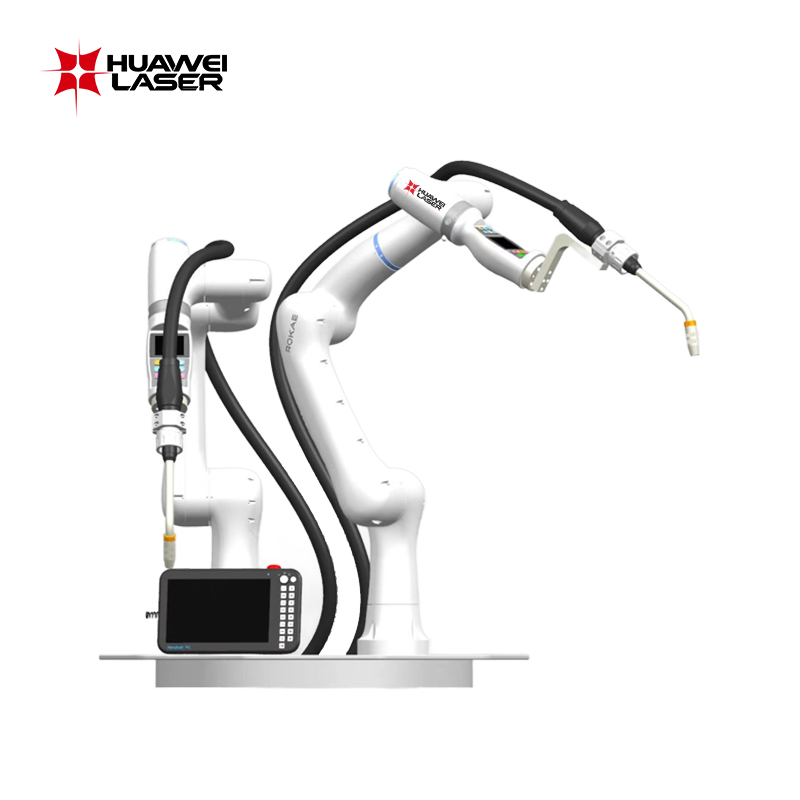
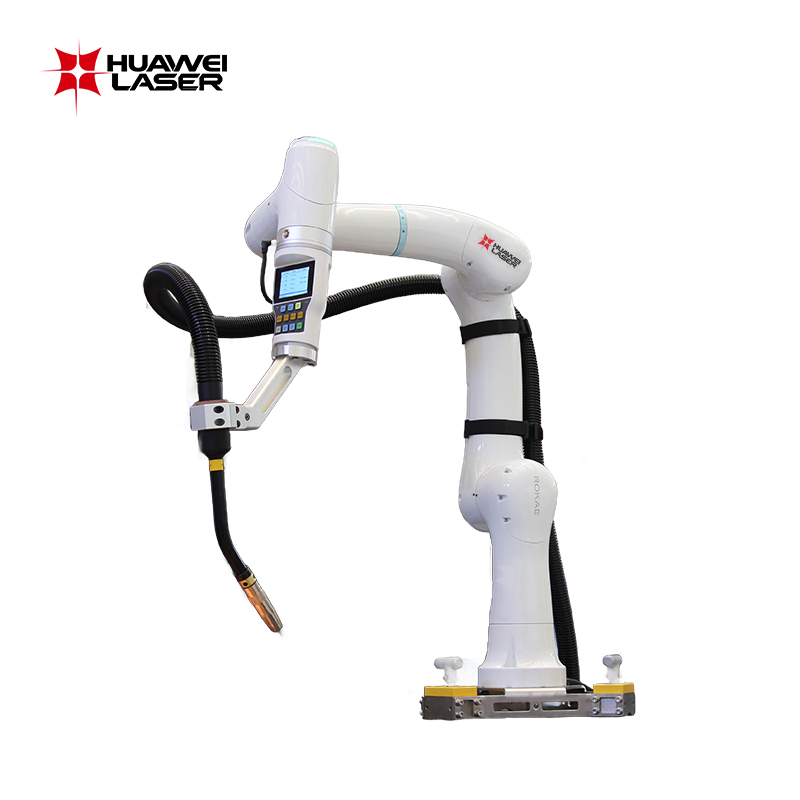
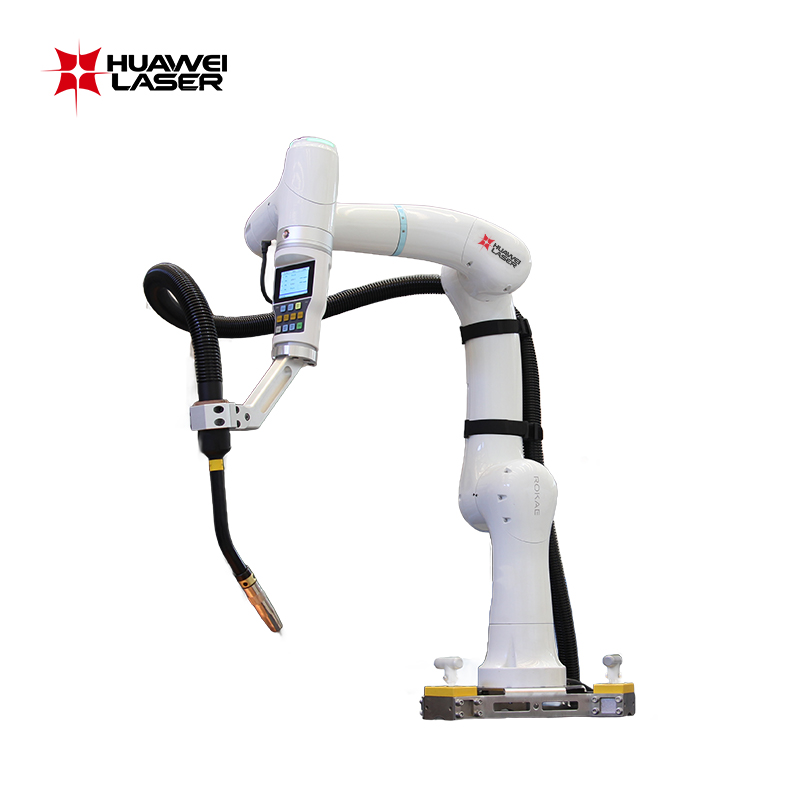
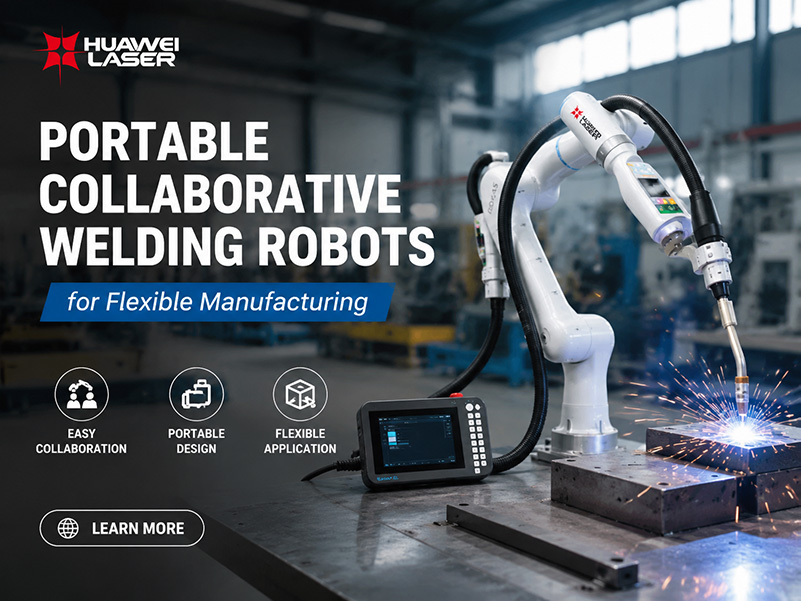
Robot Welding Machine for Machinery Manufacturing Applications from Huawei Laser is an automated welding solution featuring a six-axis robot, MIG welding system and intelligent control. With 919mm and 1434mm working radius options, it is designed for machinery manufacturing, metal fabrication and customized welding applications.
Send Inquiry
Product Description
The Robot Welding Machine for Machinery Manufacturing Applications from Huawei Laser is designed for machinery manufacturers that need more consistent welding and less dependence on manual operation.
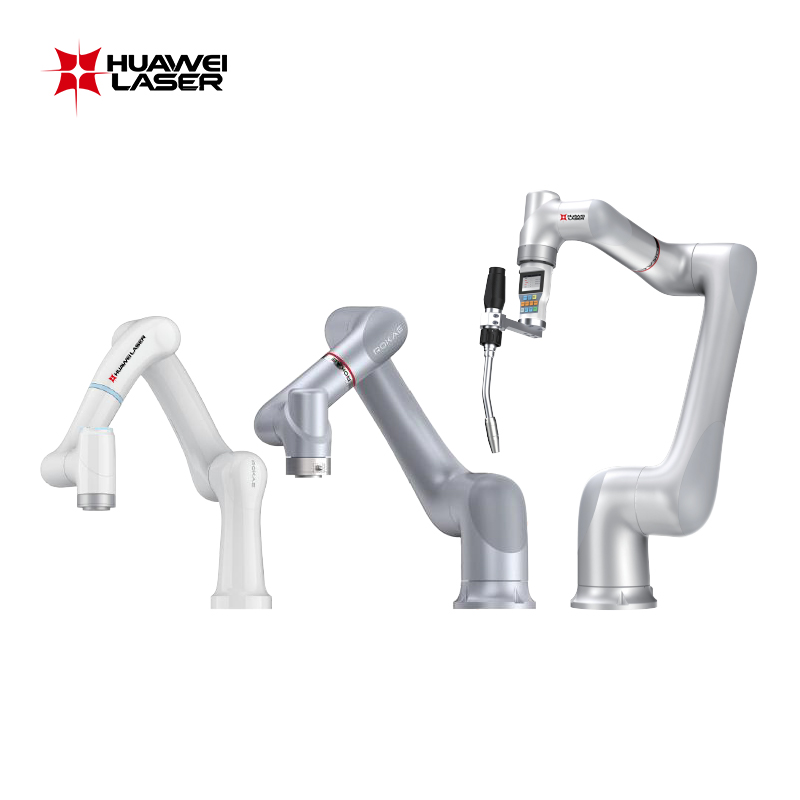
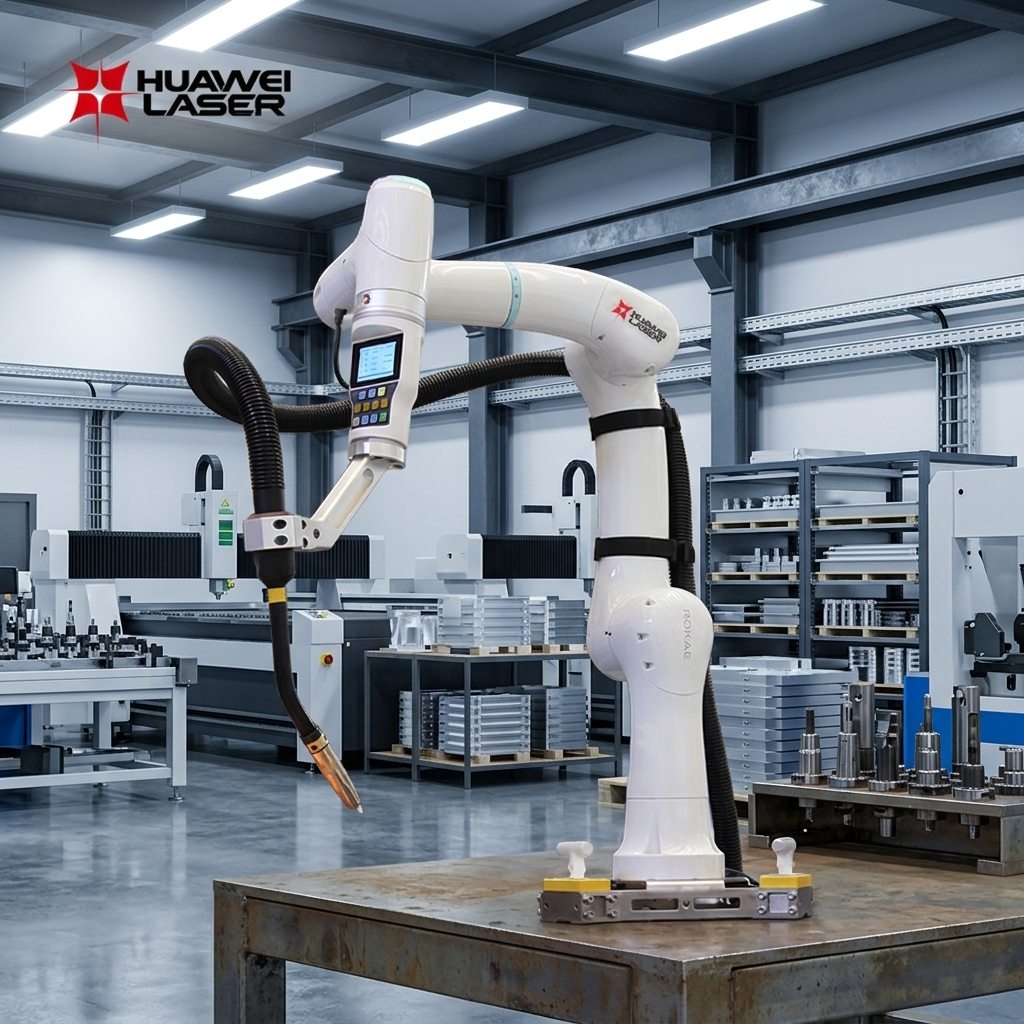
With a six-axis robot arm, precise motion control and MIG welding, the system can handle machine frames, equipment components and mechanical assemblies with repeatable welding paths. Two robot configurations are available: 919mm working radius with 5kg payload and 1434mm working radius with 12kg payload, allowing manufacturers to match the robot to different workpiece sizes and production layouts.
Why It Fits Machinery Manufacturing
Machinery production rarely involves only one type of workpiece. Frames, housings and mechanical assemblies can vary in size, shape and welding position.
The Robot Welding Machine for Machinery Manufacturing Applications is built around this reality. Its six-axis movement provides access to different welding angles, while programmable motion allows the same welding process to be repeated across batches.
For manufacturers moving from manual welding toward automation, the system provides a practical way to improve consistency without losing production flexibility.
Key Features
1. Two Robot Sizes for Different Workpieces
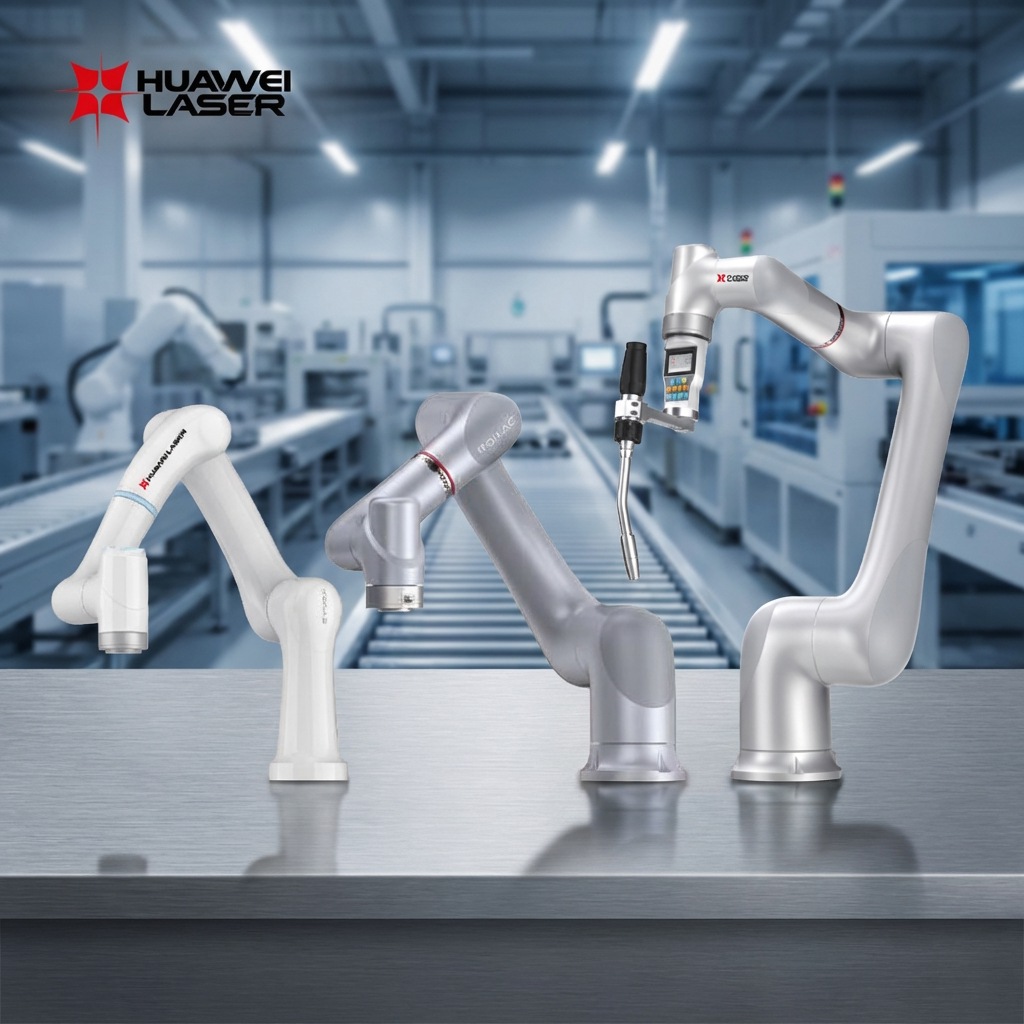
Huawei Laser offers two robot arm configurations:
| Model | Payload | Working Radius | Repeatability | Max. Tool Speed |
| HW-X00-919 | 5kg | 919mm | ±0.02mm | ≤2.0m/s |
| HW-X00-1434 | 12kg | 1434mm | ±0.02mm | ≤3.0m/s |
This gives manufacturers more freedom when planning welding workstations.
2. Six-Axis Movement for Complex Machinery Parts
Machinery components often include corners, brackets, frames and multi-angle joints that are difficult to access with fixed welding equipment.
The six-axis robot can change torch orientation and approach the welding joint from different directions.
Based on its six-axis structure, the system provides:
Multi-angle welding
Flexible torch positioning
Access to complex joints
Programmable welding paths
This makes it suitable for machinery parts with different geometries and welding positions.
3. ±0.02mm Repeatability for Consistent Welding Paths
For batch manufacturing, repeating the same welding movement is important.
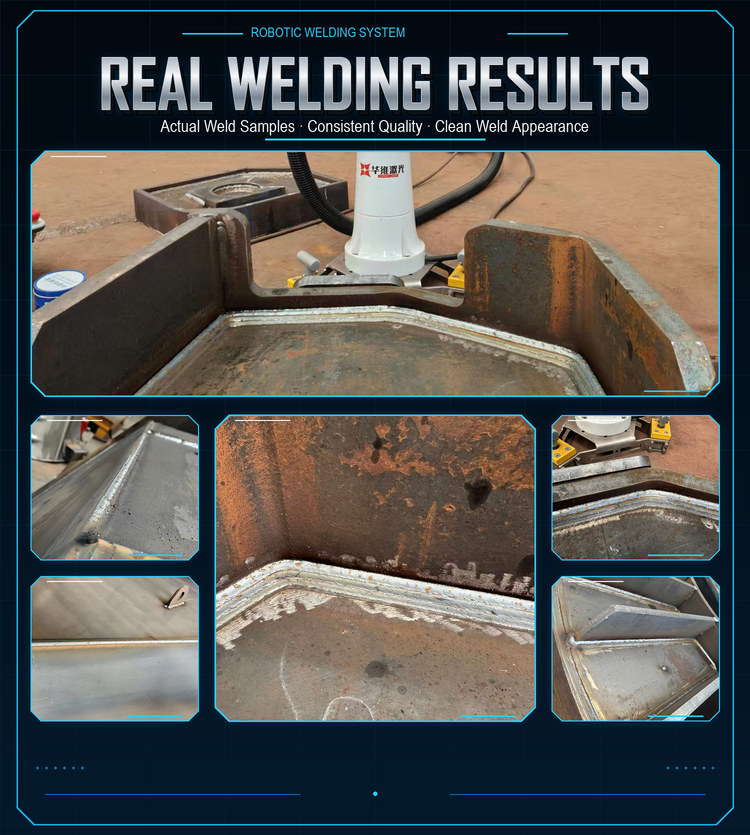
Both robot configurations provide ±0.02mm repeatability, helping the robot follow programmed welding paths with high positional consistency.
This is particularly useful for machinery manufacturers producing repeated frames, housings and mechanical assemblies.
Key advantages:
±0.02mm repeatability
Consistent torch positioning
Repeatable welding paths
Reduced variation between workpieces
4. Hand-Guided Teaching for Faster Setup
Not every production order is identical. When manufacturers introduce a new workpiece, programming efficiency becomes important.
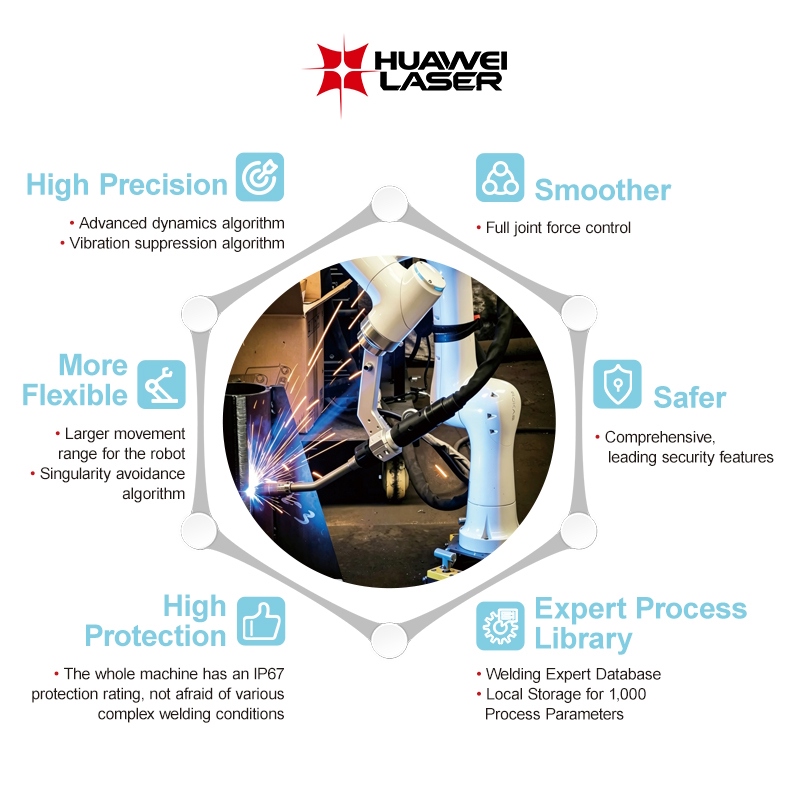
The robot supports hand-guided teaching through force and torque sensing technology. Operators can guide the robot to the required position and create welding paths more conveniently.
This helps reduce programming complexity when switching between different machinery components or customized orders.
5. Complete MIG Welding System
The robot is integrated with a complete welding system rather than operating as a standalone robot arm.
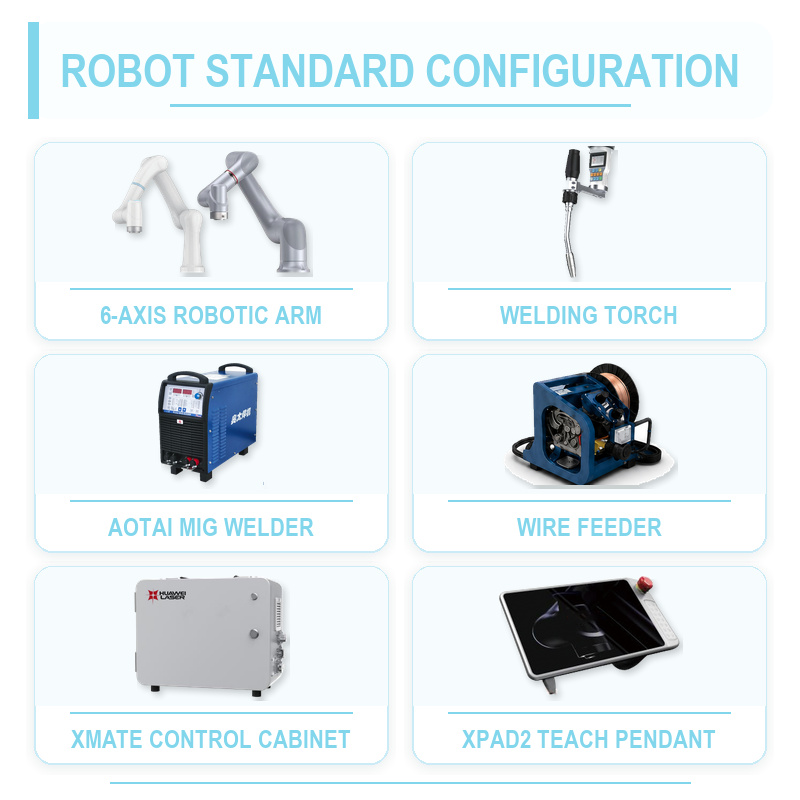
The standard configuration can include:
Six-axis robot arm
MIG welding torch
MIG welding machine
Wire feeder
Control cabinet
Teach pendant
The coordinated system allows robot movement, welding parameters and wire feeding to work together during automated welding.
Welding Process Options
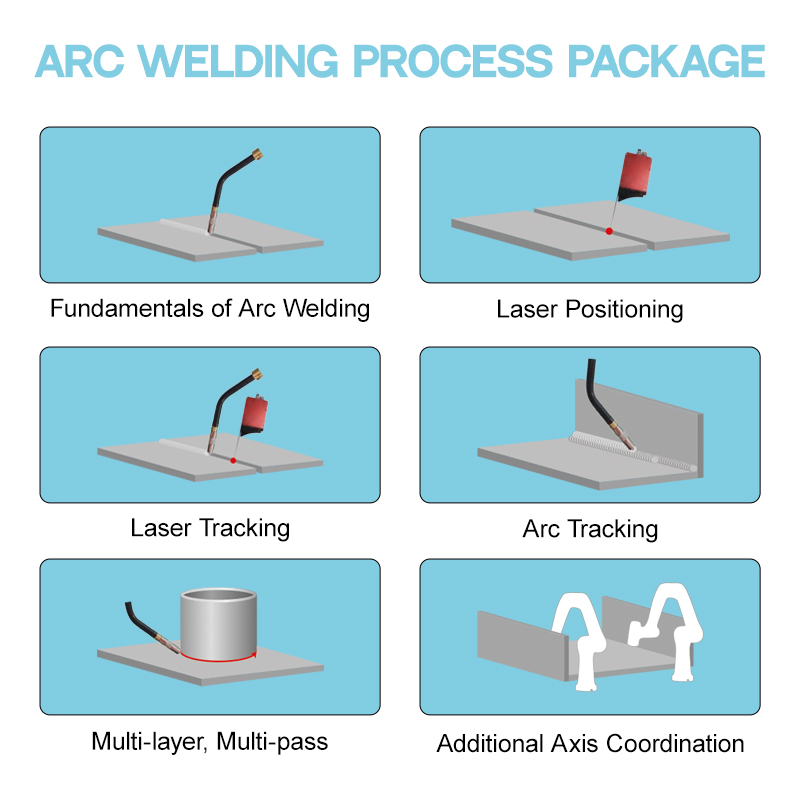
Different machinery components may require different levels of welding automation. Huawei Laser provides several process options according to production requirements.
Laser Positioning
Helps locate the welding seam before operation.
Laser Seam Tracking
Detects seam deviation and adjusts the welding path.
Arc Tracking
Uses welding current and voltage feedback to optimize torch movement.
Multi-Layer & Multi-Pass Welding
Supports welding applications requiring multiple layers or passes.
External Axis Coordination
Coordinates robot movement with positioners for larger or more complex workpieces.
Technical Specifications
| Item | HW-X00-919 | HW-X00-1434 |
| Robot Type | Six-Axis Robot | Six-Axis Robot |
| Payload | 5kg | 12kg |
| Working Radius | 919mm | 1434mm |
| Repeatability | ±0.02mm | ±0.02mm |
| Maximum Tool Speed | ≤2.0m/s | ≤3.0m/s |
| Robot Weight | 16.5kg | 41kg |
| Welding Process | MIG | MIG / Heavy Welding |
Applications
Machinery Manufacturing
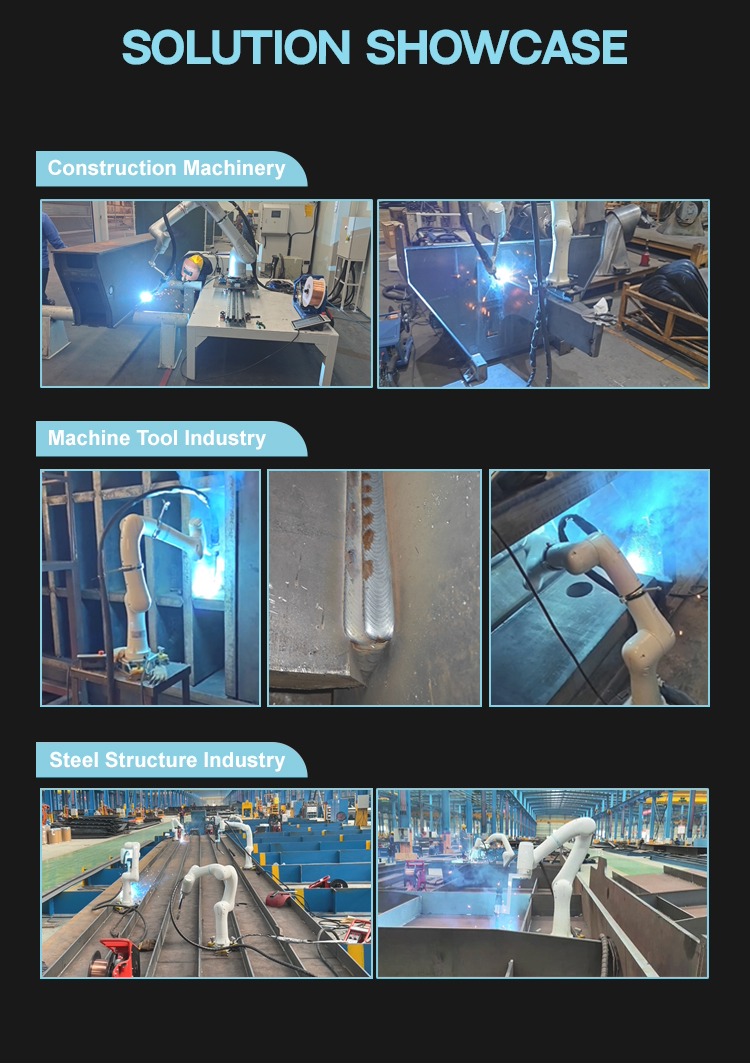
The Robot Welding Machine for Machinery Manufacturing Applications is designed for automated welding of machinery components and assemblies.
Typical applications include:
Machine frames
Equipment housings
Mechanical components
Support structures
Metal assemblies
Metal Fabrication
Suitable for manufacturers producing repeated metal structures and fabricated components.
Equipment Manufacturing
The robot can be integrated into welding workstations for equipment frames, housings and structural components.
Customized Production
Programmable welding paths make the system suitable for manufacturers handling multiple product models and small-batch orders.
Optional System Configurations
To adapt the welding robot to different production environments, Huawei Laser can provide optional equipment including:
Smart Handle — Supports convenient hand-guided programming.
Laser Sensor — Enables automatic seam tracking.
Magnetic Base — Facilitates quick installation.
Mobile Trolley — Makes workstation movement easier.
Linear Track — Extends the robot's working range.
Gantry System — Suitable for larger welding applications.
How the Robot Welding System Works
The robot first receives a programmed welding path through the control system.
During operation, the six-axis arm moves the welding torch along the programmed trajectory while the MIG welding system supplies the welding current and wire.
For applications using seam tracking or other sensing functions, the system can adjust the welding path according to the detected workpiece position.
The result is a repeatable automated welding process that reduces the need for continuous manual torch control.
Huawei Laser: From Welding Equipment to Automation
For machinery manufacturers, automation is not simply about replacing manual work. It is about making the welding process easier to repeat, easier to manage and more adaptable to production changes.
Huawei Laser provides robotic welding systems with different robot sizes, welding configurations and automation options to match different manufacturing requirements.
Huawei Laser provides:
Complete robotic welding systems
919mm and 1434mm robot options
MIG welding integration
Intelligent teaching functions
Customized workstation solutions
Technical support
Contact Huawei Laser
Automate Your Machinery Welding Process
The Robot Welding Machine for Machinery Manufacturing Applications provides manufacturers with a flexible solution for moving from manual welding toward repeatable automated production.
With six-axis movement, ±0.02mm repeatability, 919mm/1434mm working radius options and integrated MIG welding, Huawei Laser can configure a robotic welding solution around your workpieces and production requirements.
Contact Huawei Laser to discuss your machinery welding application and system configuration.

Hot Tags: Robot Welding Machine for Machinery Manufacturing Applications, China, Manufacturer, Supplier, Wholesale, Factory, Customized, Price
Product Tag
Related Category
Sheet Metal Laser Cutting Machine
Tube Metal Laser Cutting Machine
Handheld Laser Welding Machine
Sheet Tube Laser Cutting Machine
H-Shaped Steel Laser Cutting Machine
Handheld Laser Cleaning Machine
Welding Robot
Send Inquiry
Please feel free to give your inquiry in the form below. We will reply you in 24 hours.
Related Products