

Metal Cleaning Made Easy with Fiber Laser Cleaning Machines
In the field of industrial manufacturing and maintenance, metal cleaning has always been a crucial but troublesome link. Traditional cleaning methods are not only inefficient and polluting, but may also cause irreversible damage to the surface of the workpiece. With the rapid development of laser technology, fiber laser metal cleaning machines, as representatives of a new generation of green cleaning technology, are gradually replacing traditional methods with their advantages of high efficiency, safety and environmental protection, making metal cleaning easier and more efficient than ever before.
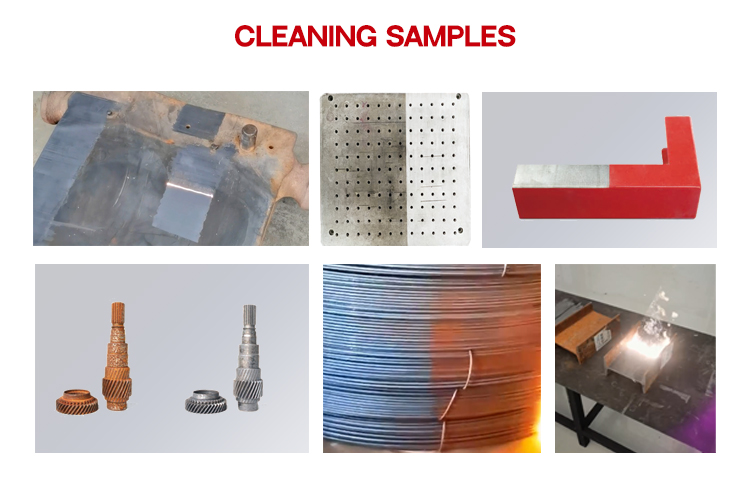
1. How does a fiber laser cleaning machine work?
The purpose of the laser cleaning process is simple: to clean the surface of a material such as metal.
There are many reasons for doing this, such as molds or preparing surface treatments. Contaminants such as carbon, rust and rubber are easily produced on the surface during the production process, and laser cleaning provides an efficient and environmentally friendly way to remove these contaminants.
So how does this process actually work?
The laser beam generates pulses on the surface of the material, irradiating and impacting the layer of material until the desired cleaning depth is reached.
The output power and wavelength of the pulses can be controlled, which can provide users with precise energy control when it comes to high precision in cleaning the surface of the material, so as to achieve the purpose of not damaging the substrate.
2. What contaminants can be removed by a fiber laser cleaning machine?
The pollutants cleaned on the surface of metal materials mainly include oxide layer (rust layer), paint layer, coating, other attachments, etc., which can be divided into organic pollutants (such as paint layer, coating) and inorganic pollutants (such as rust layer) according to the type of pollutants.
The cleaning of pollutants on the surface of metal materials is mainly to meet the requirements of subsequent processing or use. For example, before welding titanium alloy parts, it is necessary to remove the oxide layer about 10μm thick on the surface of the material. During aircraft overhaul, the original paint coating on the skin surface needs to be removed for re-spraying. Rubber tire molds need to be regularly cleaned of rubber particles attached to them to ensure the cleanliness of the surface and thus ensure the quality of the tires produced and the life of the mold. The damage threshold of metal materials is higher than the laser cleaning threshold of their surface pollutants. By selecting the appropriate power laser, a better cleaning effect can be achieved, and it has been maturely applied in some fields.
3. What advantages does the laser metal cleaning machine bring?
Environmental advantages:
Laser cleaning is a “green” cleaning method that does not require the use of any chemical agents and cleaning fluids. The cleaned waste is basically solid powder, small in size, easy to store, recyclable, no photochemical reaction, and no pollution. It can easily solve the environmental pollution problem caused by chemical cleaning. Often, an exhaust fan can solve the problem of waste generated by cleaning.
Effect advantage
Traditional cleaning methods are often contact cleaning, which has a mechanical force on the surface of the cleaning object, damaging the surface of the object or the cleaning medium is attached to the surface of the cleaned object and cannot be removed, resulting in secondary pollution. The non-abrasive and non-contact nature of laser cleaning, and the non-thermal effect will not damage the substrate, so these problems can be solved.
Control advantage
Laser can be transmitted through optical fiber, cooperate with manipulators and robots, and easily realize long-distance operation. It can clean parts that are difficult to reach by traditional methods. This can ensure the safety of personnel in some dangerous places.
Portable advantage
Laser cleaning can remove various types of pollutants on the surface of various materials, achieving a cleanliness that cannot be achieved by conventional cleaning. It can also selectively clean pollutants on the surface of materials without damaging the surface of the materials.
4. Tips to improve the quality of laser metal cleaning
For mild rust or oil stains, use lower power to achieve good cleaning results;
For thick oxide layers or severe rust, it is recommended to use medium to high power (above 1000W);
Adjust the focal length to obtain the best energy focus point, and the focus should fall exactly on the surface of the contaminated layer;
Focus the beam in the right direction;
Maintain the optimal distance between the cleaning head and the material;
Regular maintenance of the fiber laser machine can extend the service life of the machine. Check and replace worn parts when necessary.
Summary
In the pursuit of high quality, high efficiency and low emissions, fiber laser metal cleaning agent is undoubtedly a valuable innovative technology. Whether you are a factory manager, equipment purchaser, or engineering technician, it is worthwhile to have a deep understanding and layout of laser cleaning applications as soon as possible to make metal surface treatment truly simple, safe and efficient.