

Before Buying a 3000W Fiber Laser Cutting Machine, Read This Guide
Why a 3000W Fiber Laser Cutting Machine Deserves Careful Evaluation
A Fiber Laser cutting machine provides fast, accurate, and repeatable processing for modern sheet metal production. Metal fabrication companies use fiber laser technology to produce brackets, cabinets, machine covers, kitchen equipment, furniture components, HVAC parts, and automotive components.
Selecting suitable equipment requires more than comparing wattage. Material type, routine thickness, sheet dimensions, accuracy, assist gas, machine structure, production volume, and technical support all affect daily results.
How a Fiber Laser Cutting Machine Works
A Fiber Laser cutting machine directs a concentrated laser beam through an optical fiber and an automatic-focusing cutting head. Focused energy melts material along the programmed path, while oxygen or nitrogen removes molten material from the kerf.
A CNC system coordinates laser output, cutting speed, focus position, gas pressure, and axis movement. Capacitive height control maintains a controlled distance between the cutting head and the sheet surface.
Suitable Sheet Metal Applications
The HWS-3KW-3015 configuration is designed primarily for carbon steel, stainless steel, and aluminum sheet processing. Aluminum results depend on alloy grade, surface condition, thickness, gas pressure, and edge-quality requirements. Sample testing with actual production material is recommended before final selection.
Sheet metal fabrication and job-shop production
Electrical cabinets, enclosures, and control panels
Kitchen, bathroom, and food-processing equipment
Machinery covers, brackets, and components
Metal furniture and architectural components
Automotive, HVAC, agricultural, and new-energy components
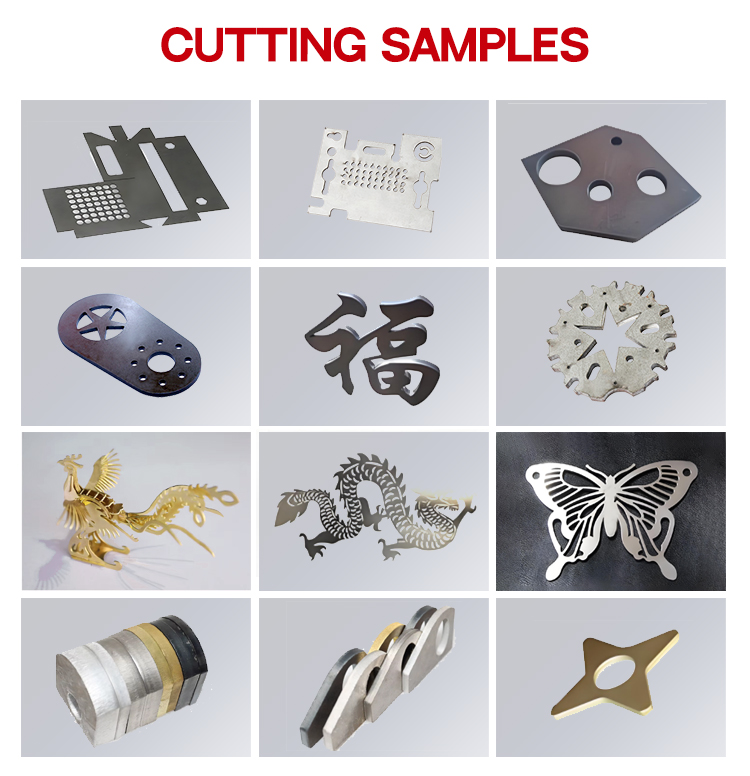
Practical Cutting Thickness for a 3000W Machine
Maximum cutting capability and stable batch-production capacity represent different operating conditions. Huawei Laser reference parameters recommend the following thickness ranges for sustained production.
|
Material |
Recommended Batch Range |
Production Note |
|
Carbon steel |
1–20 mm |
Suitable for sustained production within validated process conditions |
|
Stainless steel |
1–8 mm |
Nitrogen process commonly selected for clean edges |
|
Aluminum |
1–6 mm |
Sample testing recommended for the actual alloy and finish |
Carbon steel up to 22 mm and stainless steel up to 10 mm may be processed under suitable conditions. Upper-limit thicknesses are not recommended as the primary batch-production workload for a 3000W configuration.
Production near the upper limit can become less stable because of material temperature, plate composition, gas pressure, surface condition, and process variation. Factories processing upper-limit thicknesses every day should consider higher laser power.
Reference Cutting Speeds
Cutting speed varies with material, thickness, focus position, gas type, gas purity, nozzle condition, and required edge quality. Reference speed should never be treated as guaranteed finished-part output.
Carbon Steel Examples
1 mm with nitrogen: approximately 35–40 m/min
3 mm with oxygen: approximately 3.5–4.5 m/min
10 mm with oxygen: approximately 1.4–1.8 m/min
20 mm with oxygen: approximately 0.6–0.65 m/min
Stainless Steel Examples
1 mm with nitrogen: approximately 45–47 m/min
3 mm with nitrogen: approximately 8–13 m/min
6 mm with nitrogen: approximately 2.3–3.0 m/min
8 mm with nitrogen: approximately 1.0–1.5 m/min
Aluminum Examples
1 mm with nitrogen: approximately 40–50 m/min
3 mm with nitrogen: approximately 8–10 m/min
6 mm with nitrogen: approximately 2.0–2.3 m/min
Piercing time, contour complexity, nesting layout, corner movement, loading, unloading, sheet quality, and operator settings can reduce actual output. Buyers should request a timed test using a representative CAD drawing.
Core Machine Configuration
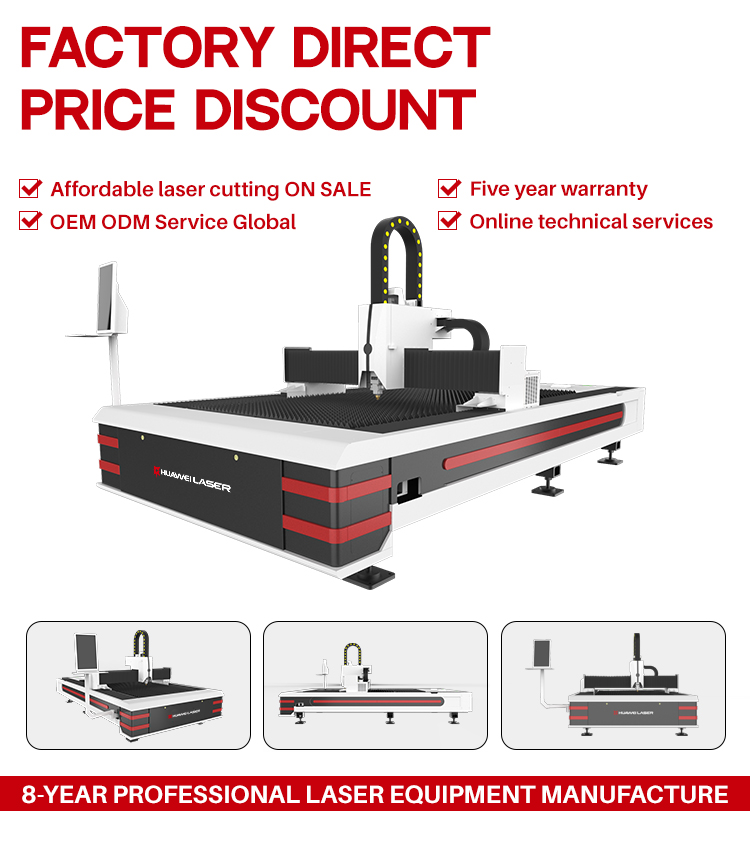
The HWS-3KW-3015 Fiber Laser cutting machine combines industrial components selected for daily sheet metal production.
- 3000W Raycus laser source
- Raytools automatic-focusing cutting head and automatic tracking system
- Raytools CNC control system
- Hanli water-cooling system
- HIWIN linear guides and rack transmission
- Servo drive and reduction systems
- SMC proportional valve and Schneider electrical components
- Automatic lubrication and integrated waste collection
Component brands alone do not determine final performance. Machine-bed rigidity, assembly quality, calibration, process development, cooling, and service support also influence uptime and repeatability.
Why Choose a Single-Platform Design?
A single-platform Fiber Laser cutting machine can provide a practical entry point for small and medium-sized metal fabrication businesses.
- Lower investment than many exchange-table systems
- Easy access to the working area
- Straightforward sheet loading and part removal
- Simple workflow for mixed or lower-volume production
- Standard 3000 × 1500 mm processing capacity
Single-platform production requires cutting to pause during loading and unloading. Factories with continuous high-volume workloads may achieve higher utilization with an exchange-platform configuration.
Huawei Laser provides open-type fiber laser cutting machines and additional sheet metal laser cutting machine configurations for different production requirements.
What Affects Cut Quality?
A Fiber Laser cutting machine cannot deliver stable production through laser power alone. Complete cutting quality depends on the material, machine, process, and maintenance condition.
- Material grade, surface condition, and sheet flatness
- Focus position, cutting speed, and laser output
- Nozzle diameter, alignment, and protective-lens cleanliness
- Assist-gas purity, pressure, and delivery stability
- Cooling-water condition and workshop temperature
- Machine calibration and preventive maintenance
Burrs, incomplete cutting, excessive dross, unstable piercing, wide kerf, or edge discoloration can indicate incorrect parameters, worn consumables, contaminated optics, or maintenance problems.
Factory Preparation Before Installation
Factory managers should confirm the installation environment before purchasing a Fiber Laser cutting machine.
- Local voltage, frequency, three-phase power, and grounding
- Oxygen and nitrogen supply capacity
- Compressed-air quality and pressure
- Fume-extraction and workshop ventilation
- Water-chiller clearance and ambient temperature
- Machine foundation, loading space, and sheet storage
- Maintenance access and operator safety controls
Final electrical and facility requirements should be confirmed according to the selected configuration and destination country.
Huawei Laser Manufacturing Experience
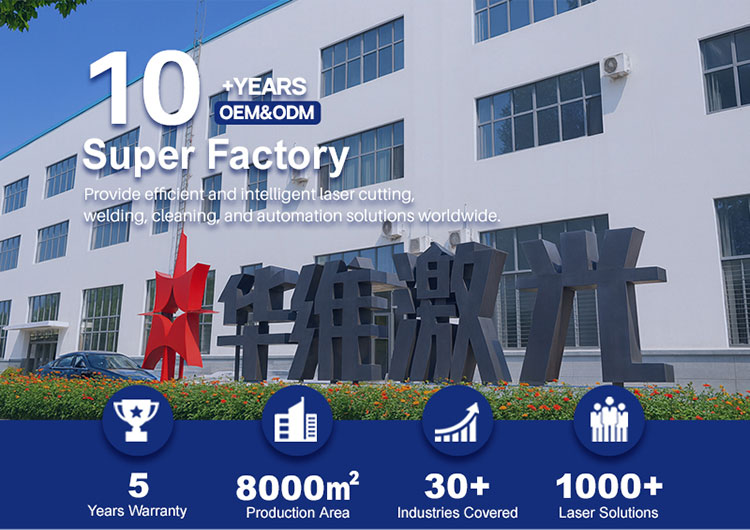
Huawei Laser was established in 2017 and operates a 10,000-square-meter manufacturing facility in Shenyang, China. Huawei Laser develops sheet metal cutting machines, tube cutting machines, laser welding equipment, laser cleaning equipment, and automated laser systems.
Huawei Laser reports ISO 9001:2015, ISO 14001:2015, and ISO 45001:2018 management-system certifications. Overseas installation, training, and maintenance support are available for international projects.
More company information is available on the Huawei Laser official website.
Is a 3000W Machine Suitable for Your Factory?
A 3000W configuration offers a balanced solution for factories processing thin and medium sheet metal. The HWS-3KW-3015 is relevant for customers requiring standard 3000 × 1500 mm sheet capacity, mixed-thickness production, CNC repeatability, open access, and moderate equipment investment.
Factories should select laser power according to routine production thickness rather than occasional maximum thickness. Daily upper-limit cutting, demanding output targets, or planned capacity growth may justify a higher-power configuration.