

Key Benefits of Collaborative Robots in Welding Applications
Manufacturing industries are rapidly adopting Collaborative Welding Robot to improve production efficiency and welding quality. Traditional manual welding processes often face challenges including labor shortages, unstable weld consistency, and rising operating costs. Collaborative Welding Robot solutions provide flexible automation capabilities for small factories, medium-sized manufacturers, and large industrial production lines.
Collaborative Welding Robot systems are widely used in sheet metal fabrication, stainless steel processing, automotive parts manufacturing, steel furniture production, and heavy equipment industries. More manufacturers are investing in Collaborative Welding Robot technology because Collaborative Welding Robot systems offer lower automation barriers and faster deployment compared with traditional robotic welding cells.
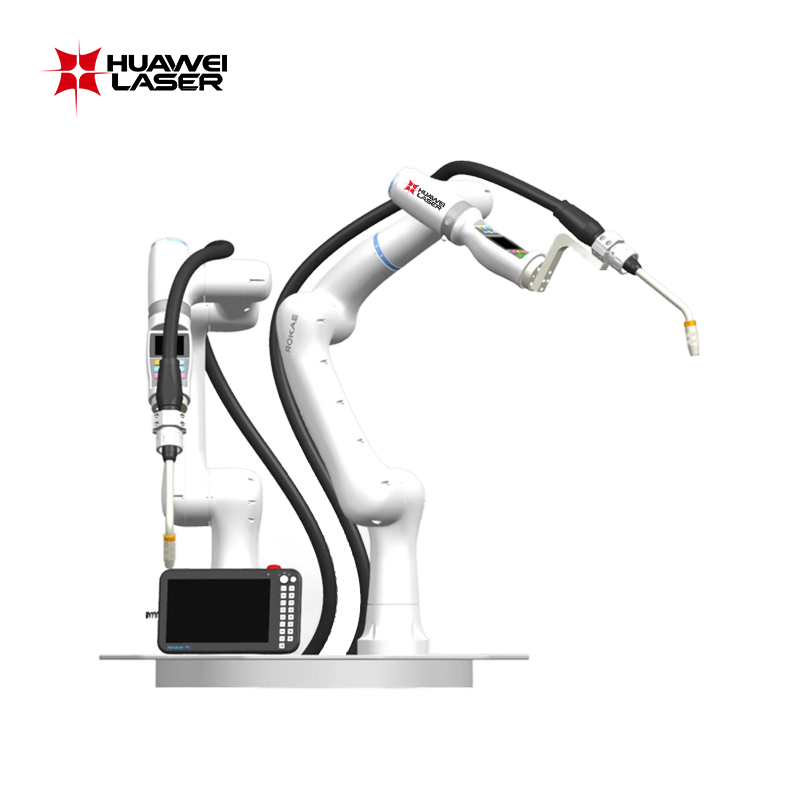
1. Higher Welding Efficiency
Collaborative Welding Robot equipment significantly improves welding speed and production stability. Manual welding operations often experience downtime caused by operator fatigue and inconsistent welding performance. Collaborative Welding Robot systems maintain stable welding paths and continuous operation during long production cycles.
Collaborative Welding Robot also reduces production interruptions during repetitive welding tasks. Faster welding speed allows manufacturers to complete more orders within shorter production timelines. Higher production efficiency helps factories reduce manufacturing costs while improving delivery performance for global customers.
2. Better Welding Quality and Consistency
Consistent welding quality is one of the most important advantages of Collaborative Welding Robot technology. Manual welding quality often depends on operator experience and working conditions. Collaborative Welding Robot systems deliver accurate weld seam positioning and repeatable welding parameters during every production cycle.
Collaborative Welding Robot helps manufacturers reduce welding defects including burn-through, incomplete fusion, and inconsistent weld appearance. Stable welding quality reduces rework costs and improves finished product reliability. Many manufacturers choose Collaborative Welding Robot solutions to meet higher international quality standards and customer expectations.
3. Flexible Automation for Multiple Applications
Flexible manufacturing capability is another major benefit of Collaborative Welding Robot systems. Traditional industrial robots often require complicated programming and fixed production layouts. Collaborative Welding Robot allows operators to quickly switch between different welding applications and production tasks.
Collaborative Welding Robot systems support carbon steel welding, aluminum welding, stainless steel welding, laser welding, and customized metal fabrication projects. Flexible automation capability makes Collaborative Welding Robot equipment suitable for low-volume and high-mix production environments. Small factories can improve manufacturing flexibility without investing in large automated production lines.
4. Reduced Labor Costs and Improved Workplace Safety
Labor shortages are creating significant challenges across global manufacturing industries. Collaborative Welding Robot helps factories reduce dependence on highly experienced welders for repetitive production tasks. Collaborative Welding Robot systems can continuously perform repetitive welding operations while reducing labor intensity and operator fatigue.
Collaborative Welding Robot also improves workplace safety by reducing direct exposure to welding smoke, heat, and arc light. Compact Collaborative Welding Robot systems require less installation space and often operate without large safety fencing structures. Improved safety and lower labor costs make Collaborative Welding Robot technology an attractive investment for modern manufacturing companies seeking long-term growth and competitive production advantages.