
Automatic Welding Robot with High Precision for Steel Fabrication
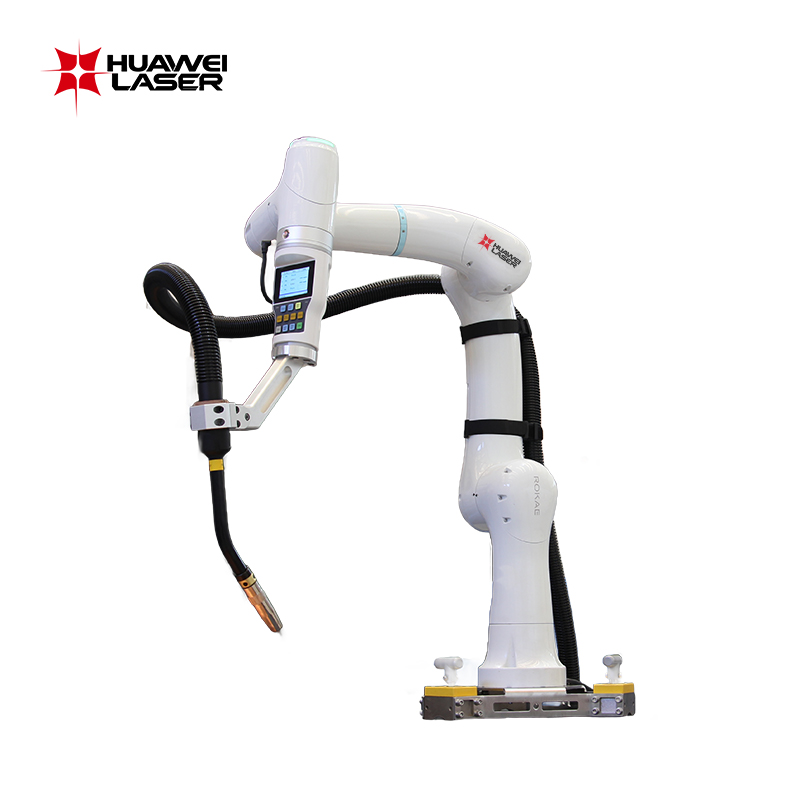
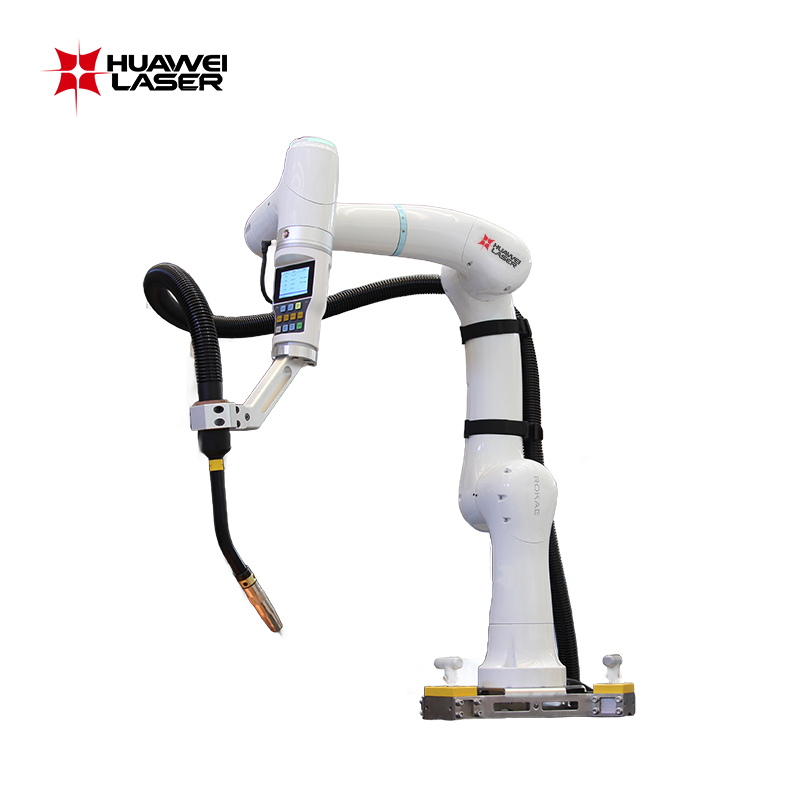
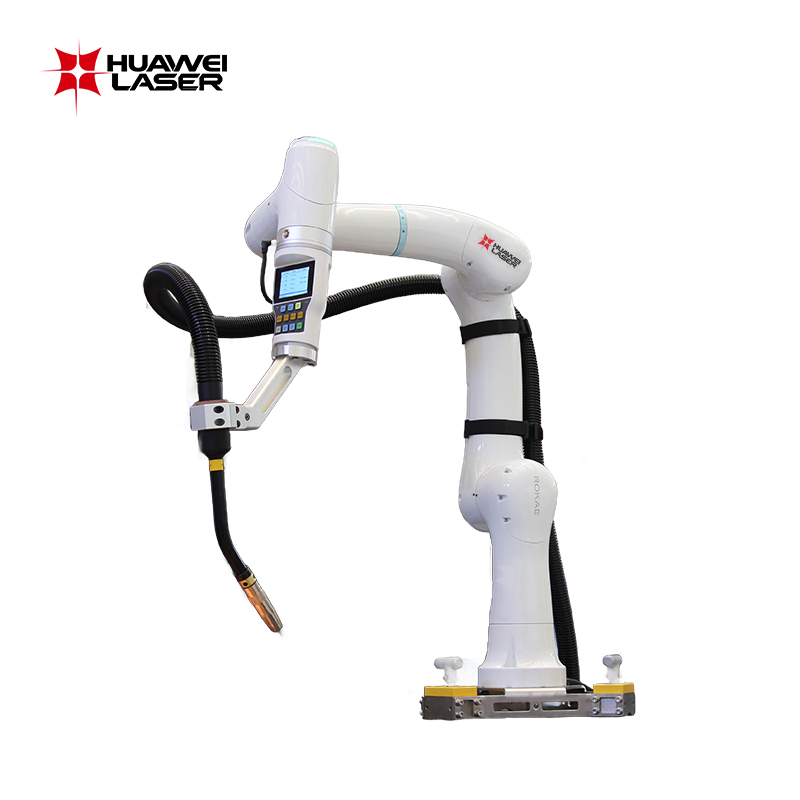
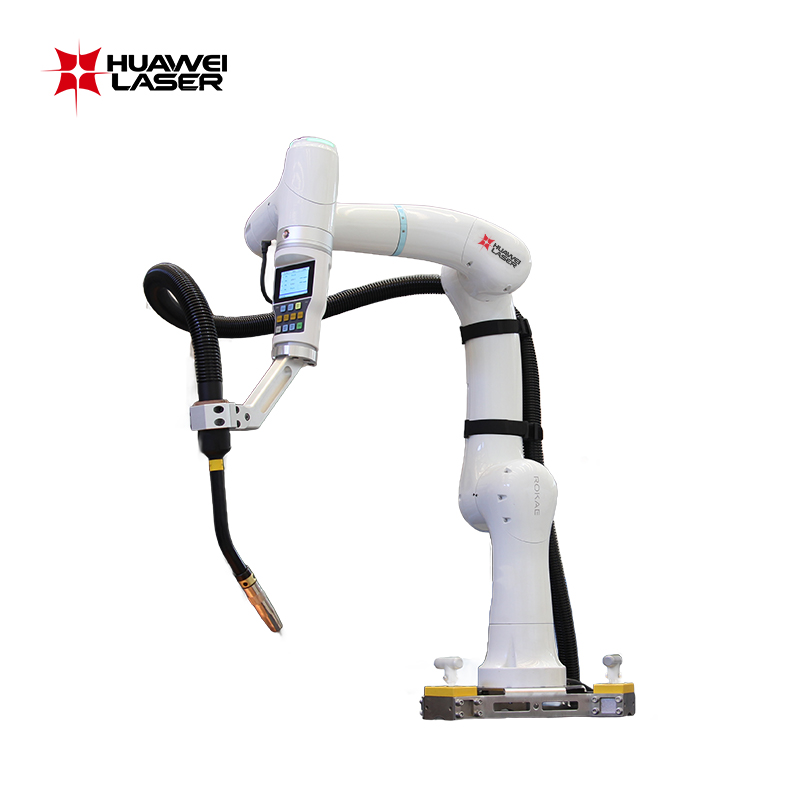
Automatic Welding Robot with High Precision for Steel Fabrication from Huawei Laser is a six-axis robotic welding solution with 919mm and 1434mm reach options, combining precise motion control and intelligent teaching for consistent welding of steel structures and fabricated metal components.
Send Inquiry
Product Description
The Automatic Welding Robot with High Precision for Steel Fabrication from Huawei Laser is designed for manufacturers looking to improve welding consistency while reducing the repetitive workload associated with manual welding.
For steel fabrication, welding quality depends heavily on torch positioning, travel speed and the ability to maintain a consistent welding path. Manual welding can be affected by operator fatigue, skill differences and changing working conditions, particularly when production involves repeated welds or multiple product models.
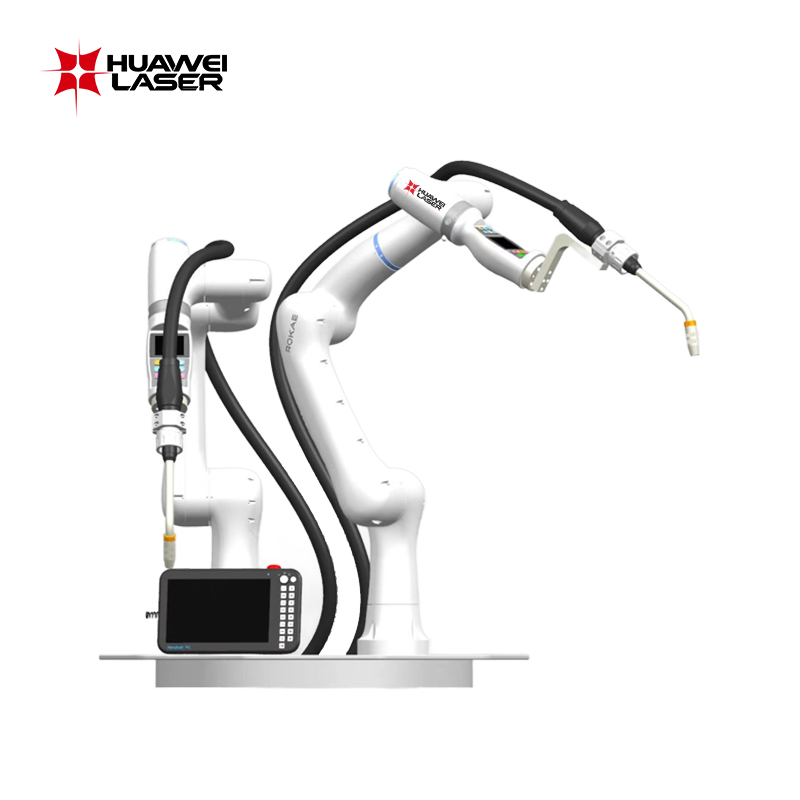
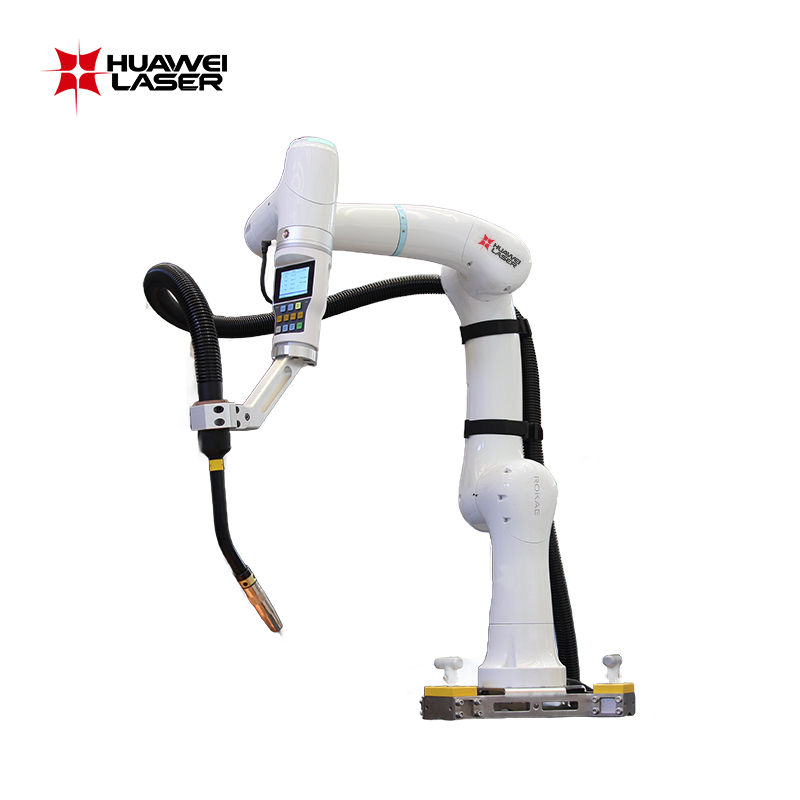
This robotic welding system combines a six-axis robot arm, welding equipment, intelligent control and teaching functions to automate programmed welding movements. The robot can follow defined welding paths with high repeatability, helping manufacturers achieve more consistent results across production batches.
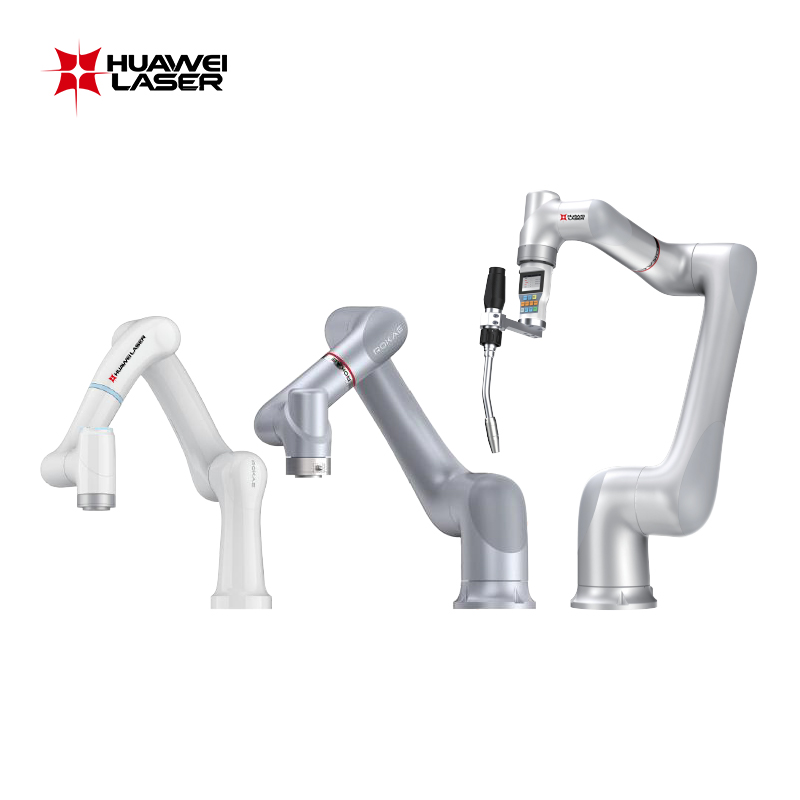
Huawei Laser provides 919mm and 1434mm working radius configurations, allowing the system to be matched with different workpiece sizes and workstation layouts. The compact configuration is suitable for smaller fabricated components, while the longer-reach model provides greater working coverage for larger steel structures.
Robot Configuration Options
Huawei Laser provides two robot arm configurations for different steel fabrication requirements.
| Specification | HW-X00-919 | HW-X00-1434 |
| Payload | 5 kg | 12 kg |
| Working Radius | 919 mm | 1434 mm |
| Repeatability | ±0.02 mm | ±0.02 mm |
| Maximum Tool Speed | ≤2.0 m/s | ≤3.0 m/s |
| Robot Weight | 16.5 kg | 41 kg |
| Typical Application | Small & medium workpieces | Medium & large workpieces |
| Welding Application | MIG Welding | MIG Welding / Heavy Welding |
The two configurations give manufacturers more freedom when selecting the robot according to workpiece dimensions, torch requirements, production volume and available floor space.
Product Advantages
1. High-Precision Motion for Consistent Welding
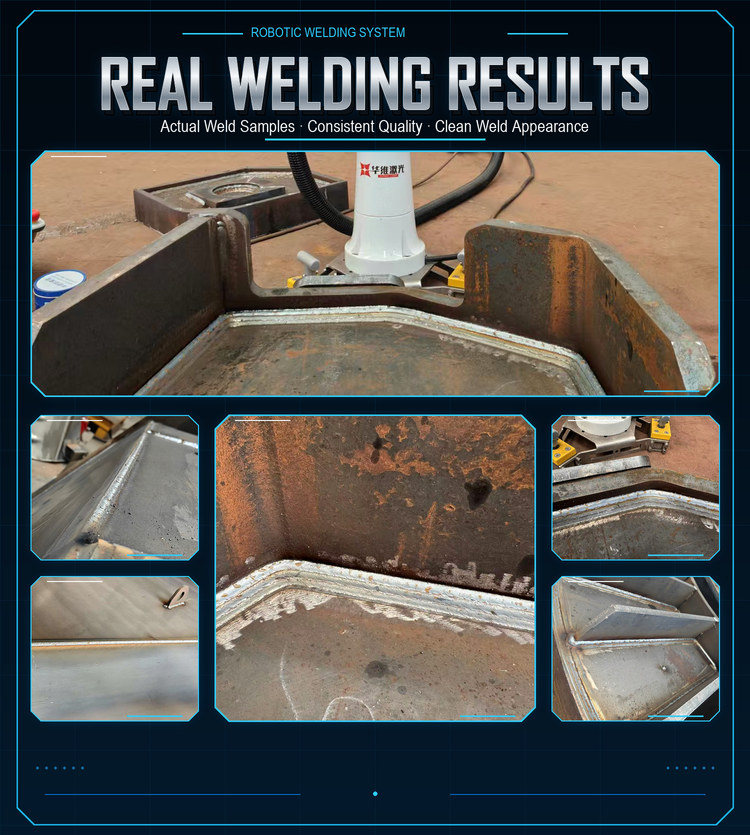
The robot provides repeatable motion control with a repeatability of ±0.02mm, helping maintain accurate torch positioning along programmed welding paths.
Unlike manual welding, where the torch angle and movement may vary from one operation to another, robotic movement follows the programmed trajectory with controlled and repeatable motion.
Key benefits
±0.02mm repeatability
Stable torch movement
Consistent welding trajectory
Reduced variation between workpieces
Improved production consistency
Suitable for repetitive welding operations
For manufacturers producing similar steel components in batches, repeatable robot movement can help establish a more consistent welding process.
2. 919mm and 1434mm Reach Options
Different fabrication projects require different robot coverage.
The 919mm model offers a compact solution for smaller and medium-sized components, while the 1434mm model provides a longer working radius for larger structures and more demanding welding applications.
919mm configuration
Suitable for:
Small metal components
Medium fabricated parts
Compact workstations
Customized welding production
1434mm configuration
Suitable for:
Larger steel components
Structural assemblies
Heavy metal fabrication
Larger welding workstations
This configuration flexibility allows customers to select the robot based on the actual size and layout of their production environment.
3. Intelligent Teaching for Faster Programming
Programming a welding robot does not have to mean creating every movement manually through complex programming procedures.
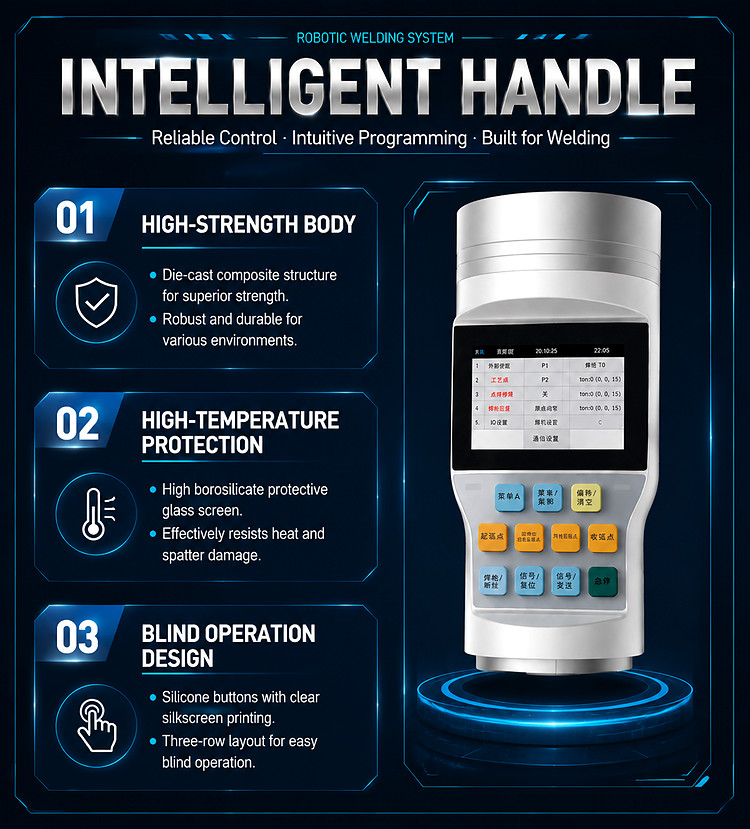
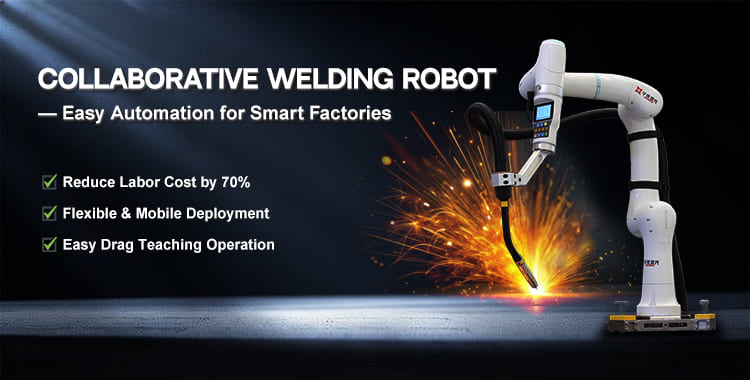
The system supports hand-guided teaching, allowing operators to guide the robot arm along the required path and record welding positions.
This approach can simplify program creation when manufacturers frequently switch between different workpieces.
Benefits
Hand-guided teaching
Faster program creation
Easier path adjustment
Reduced programming workload
Convenient production changeover
Suitable for customized and small-batch production
For companies handling multiple product models, the teaching function can make robotic welding more practical and easier to adapt.
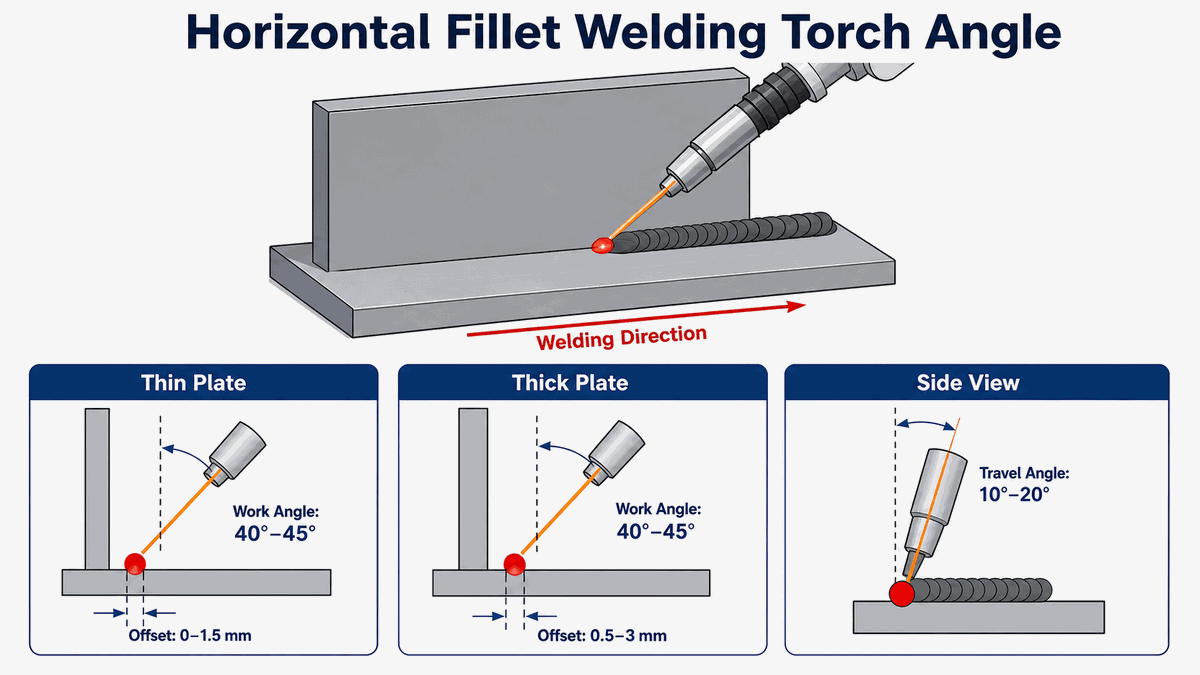
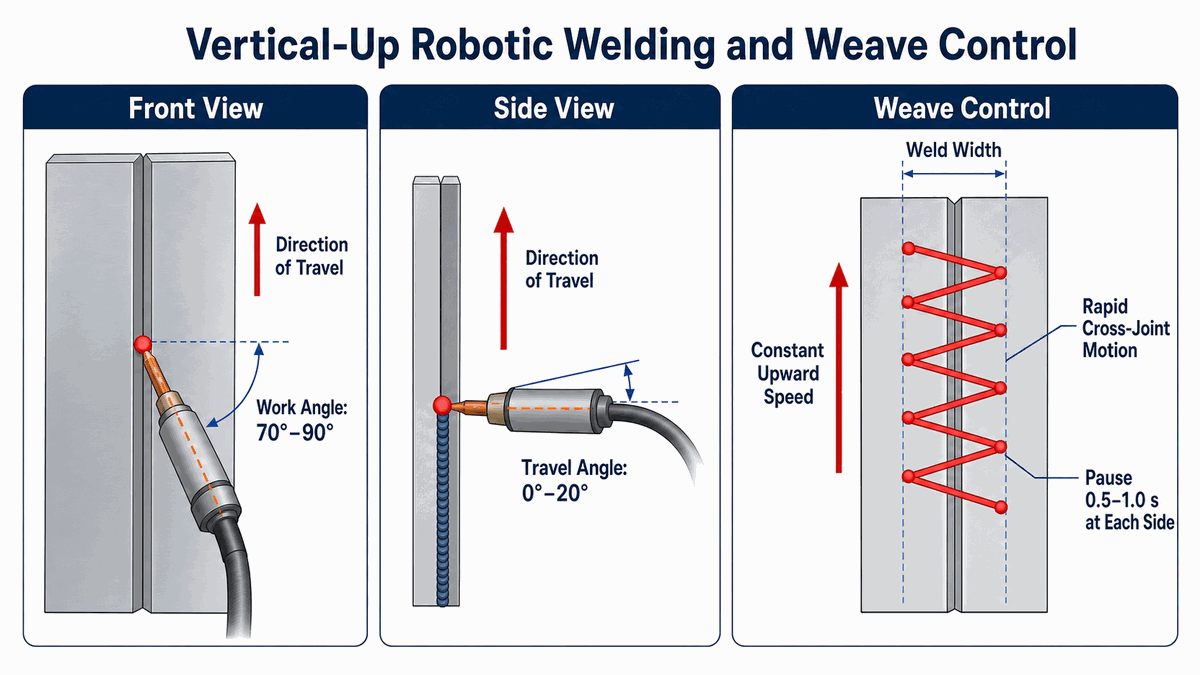
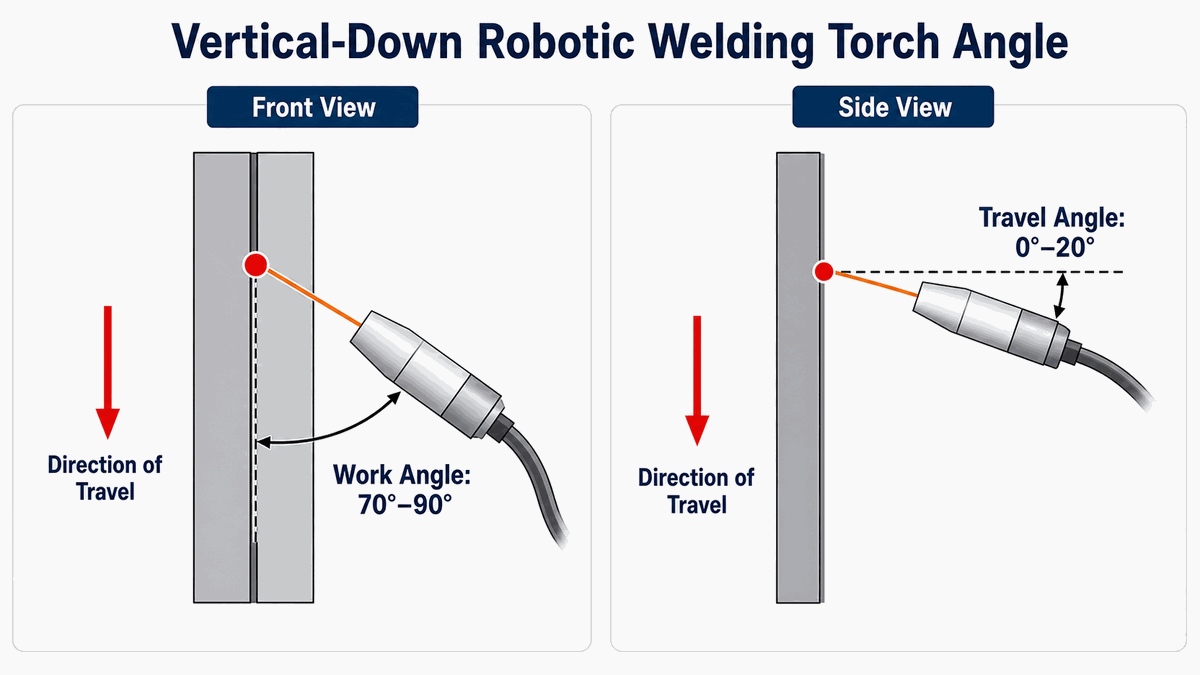
4. Six-Axis Movement for Multi-Angle Welding
The six-axis robot structure provides flexible movement across multiple directions and welding positions.
This allows the welding torch to approach components from different angles and follow more complex welding trajectories.
Advantages
Six-axis movement
Flexible torch orientation
Multi-angle welding
Access to different welding positions
Suitable for complex fabricated structures
Improved welding accessibility
The robot can therefore handle more than simple straight welding paths, making it suitable for components with different geometries and joint positions.
5. Automated Welding Reduces Repetitive Manual Work
Repetitive welding can place a significant workload on operators, especially when the same welding task needs to be performed many times.
Once a suitable welding program has been created, the robot can repeatedly execute the programmed movement, reducing the need for operators to manually control every welding path.
Production benefits
Reduced repetitive labor
More consistent welding movement
Improved production efficiency
Easier batch production
Reduced dependence on continuous manual operation
The operator can focus more on workpiece preparation, quality inspection and production management rather than repeating the same welding movement throughout the day.
Welding Process Functions
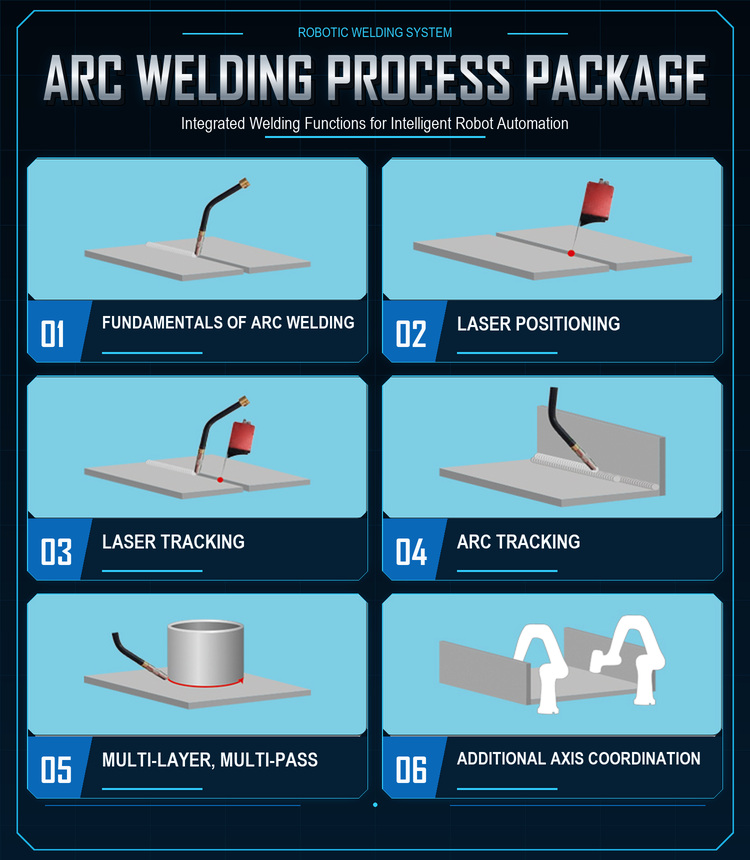
Laser Positioning
Laser positioning can assist the robot in locating the welding area before the welding operation begins.
It is useful when workpiece positioning may vary between batches and additional positioning assistance is required.
Laser Seam Tracking
Laser seam tracking can detect changes in the welding seam position and provide trajectory adjustment during the welding process.
This is useful for applications where workpiece tolerances or positioning variations may affect the actual seam location.
Arc Tracking
Arc tracking uses welding current and voltage feedback to help the robot adjust torch movement during welding.
It can provide an additional method of maintaining the welding path when seam conditions change.
Multi-Layer & Multi-Pass Welding
For applications involving thicker metal sections, the system can support multi-layer and multi-pass welding processes.
The robot can execute programmed welding paths layer by layer according to the selected welding process.
External Axis Coordination
For larger or more complex workpieces, external positioning equipment can work together with the robot.
Coordinated robot and positioner movement can expand the effective processing area and improve access to different welding positions.
Robotic Welding System Configuration
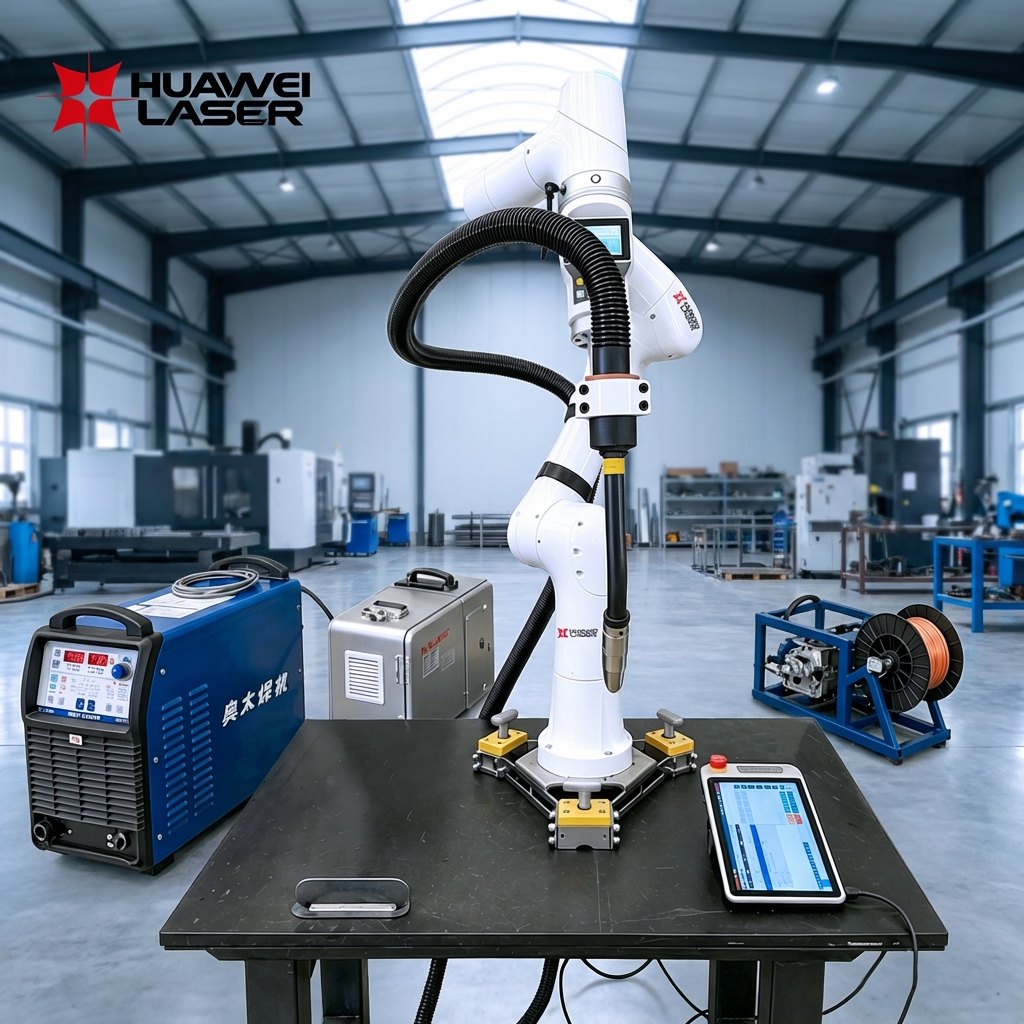
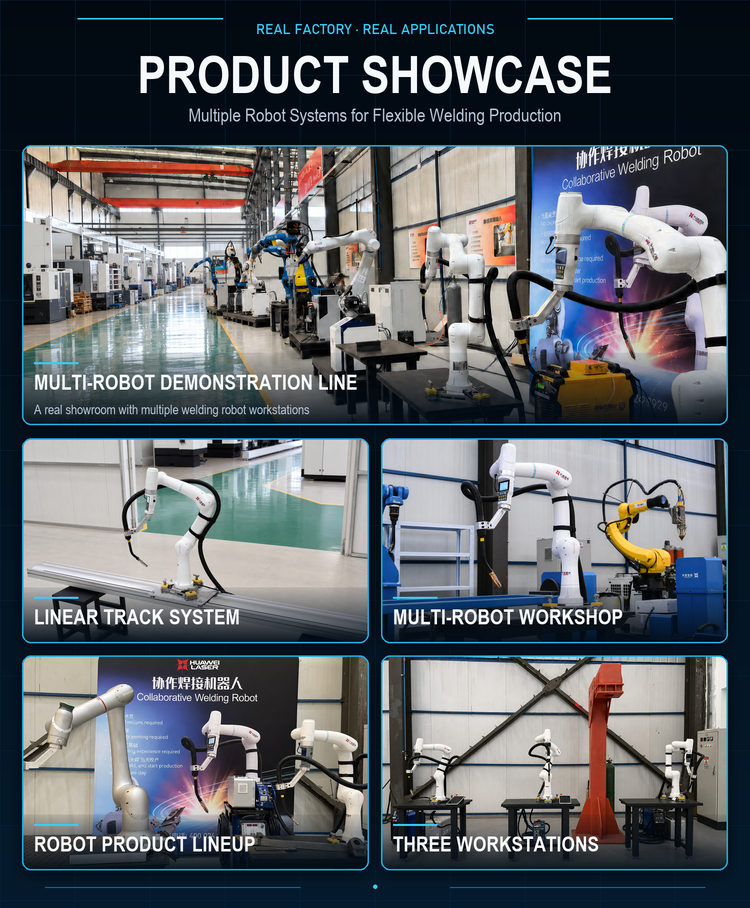
Huawei Laser provides an integrated robotic welding workstation combining robot movement, welding equipment and control components.
| Component | Function | Main Feature |
| Six-Axis Robot Arm | Controls welding movement | 5kg/12kg payload, 919mm/1434mm reach |
| Welding Torch | Performs welding | Accurate positioning and calibration support |
| MIG Welder | Provides welding power | Stable arc performance |
| Wire Feeder | Supplies welding wire | Smooth and consistent wire feeding |
| Control Cabinet | Manages robot operation | Intelligent motion control |
| Teach Pendant | Programming and operation | Convenient parameter adjustment |
The combination of these components creates a complete welding automation system rather than a standalone robot arm.
How the Automatic Welding Robot Works
The Automatic Welding Robot with High Precision for Steel Fabrication operates by combining programmed robot movement with controlled welding parameters.
After the workpiece is positioned, the operator can create or load the required welding program. The six-axis robot then moves the welding torch along the programmed path while the welding system controls the arc and wire feeding process.
For applications equipped with positioning or tracking functions, additional sensing information can be used to improve torch positioning during the welding operation.
Once the program has been verified, the robot can repeat the same welding sequence for multiple workpieces, helping manufacturers establish a more consistent production process.
Product Applications
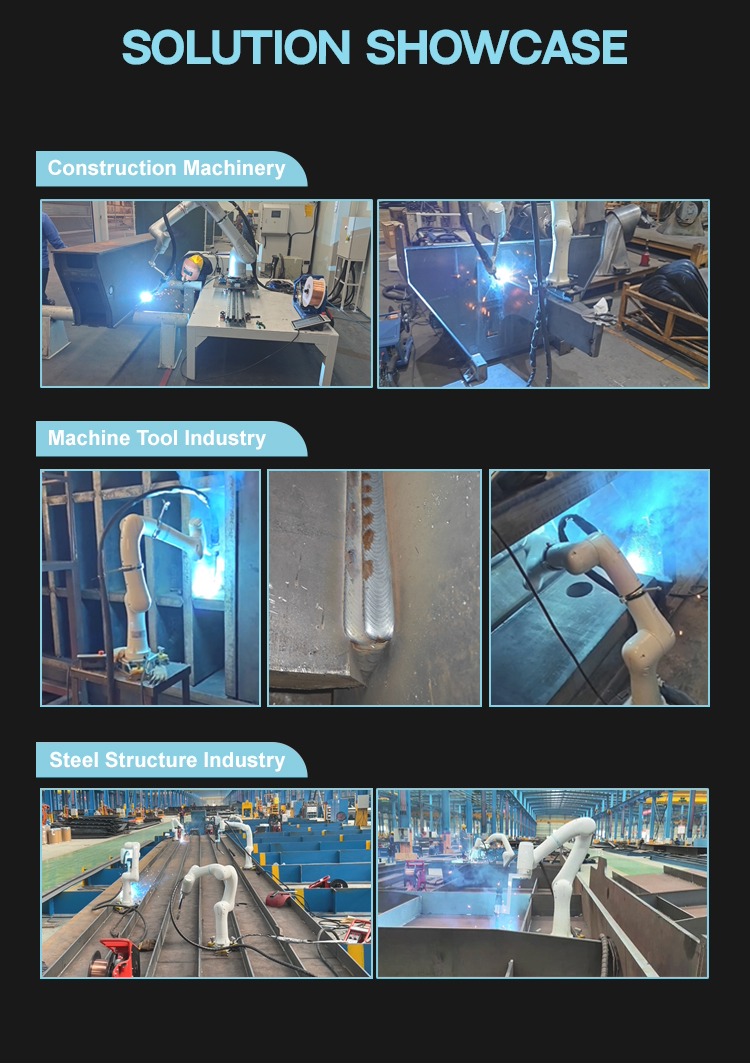
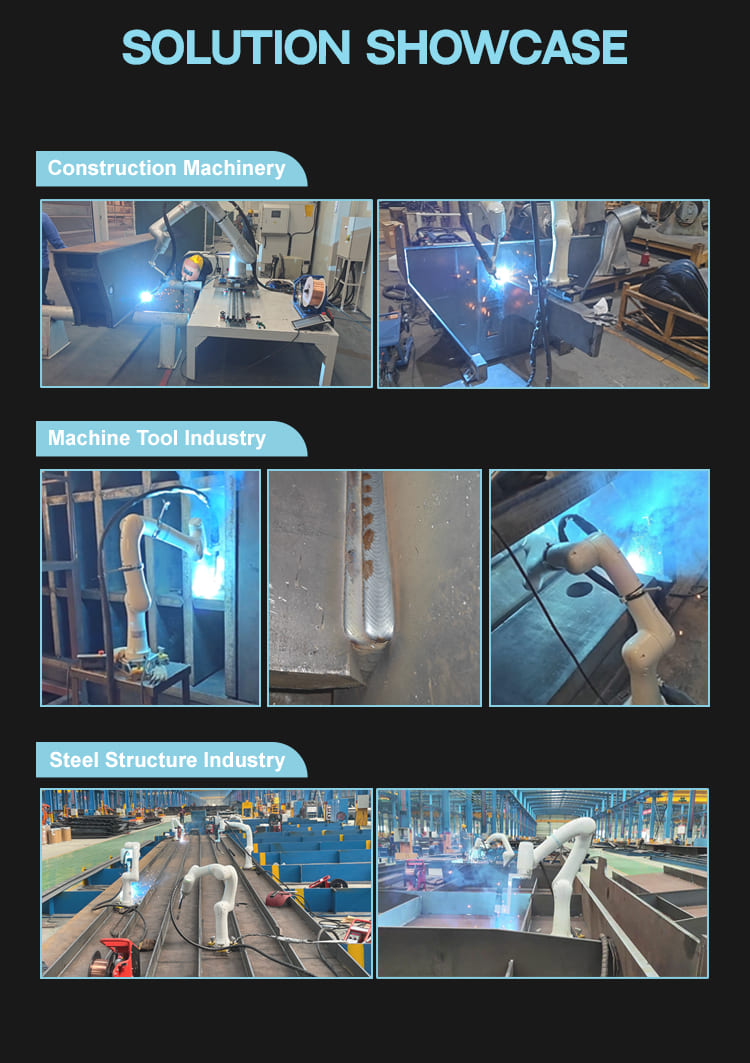
Steel Fabrication
The robot is designed for steel fabrication applications where repeatable welding and stable production are important.
Typical applications include:
Steel frames
Structural components
Metal assemblies
Fabricated steel parts
Customized structures
Machinery Manufacturing
The system can automate welding operations for machinery and equipment components.
Suitable applications include:
Machine frames
Equipment structures
Mechanical assemblies
Metal housings
Support structures
The repeatable robot movement helps maintain consistent welding paths across production batches.
Metal Fabrication
For manufacturers producing customized metal components, robotic welding can reduce repetitive manual work while providing a more consistent welding process.
It is suitable for:
Metal brackets
Frames
Fabricated components
Customized parts
Small-batch production
Heavy Metal Structures
The 1434mm configuration provides a longer working radius and higher payload capability, making it suitable for larger components and more demanding welding applications.
Typical applications include:
Large steel structures
Heavy assemblies
Structural frames
Large fabricated components
Customized Welding Production
The intelligent teaching system and flexible programming functions make the robot suitable for manufacturers handling different workpiece designs.
It can support:
Prototype production
Small-batch manufacturing
Customized orders
Multi-model production
Flexible fabrication
Why Choose Huawei Laser?
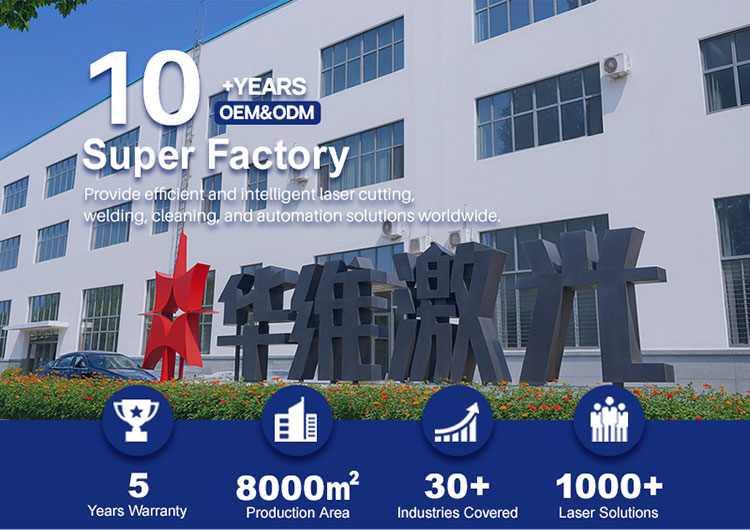
Huawei Laser develops and manufactures laser and robotic automation equipment for metal processing and intelligent manufacturing applications.
For robotic welding projects, equipment performance is only one part of the solution. Robot configuration, welding equipment, programming method, workstation design and production requirements all need to work together.
Huawei Laser provides flexible robot configurations and integrated welding system options to help customers build a solution around their actual fabrication process.
Huawei Laser provides:
High-precision robotic welding systems
Multiple robot reach configurations
Integrated welding workstations
Intelligent teaching functions
Flexible automation options
Customized production solutions
Technical support for equipment integration
From individual welding workstations to more advanced automated production systems, Huawei Laser helps manufacturers improve welding consistency and reduce repetitive manual work.
Contact Huawei Laser
Build a More Consistent Welding Process
The Automatic Welding Robot with High Precision for Steel Fabrication is designed for manufacturers that want to move beyond repetitive manual welding while maintaining flexibility for different products.
With 919mm and 1434mm robot configurations, ±0.02mm repeatability, intelligent teaching and optional seam tracking functions, Huawei Laser provides a flexible foundation for automated steel and metal fabrication.
If you are planning to automate welding production, contact Huawei Laser with your workpiece size, material, welding process and production requirements to discuss a suitable robotic welding solution.

Hot Tags: Automatic Welding Robot with High Precision for Steel Fabrication, China, Manufacturer, Supplier, Wholesale, Factory, Customized, Price
Product Tag
Related Category
Sheet Metal Laser Cutting Machine
Tube Metal Laser Cutting Machine
Handheld Laser Welding Machine
Sheet Tube Laser Cutting Machine
H-Shaped Steel Laser Cutting Machine
Handheld Laser Cleaning Machine
Welding Robot
Send Inquiry
Please feel free to give your inquiry in the form below. We will reply you in 24 hours.
Related Products