
Automatic Welding Robot for Steel Structure Manufacturing
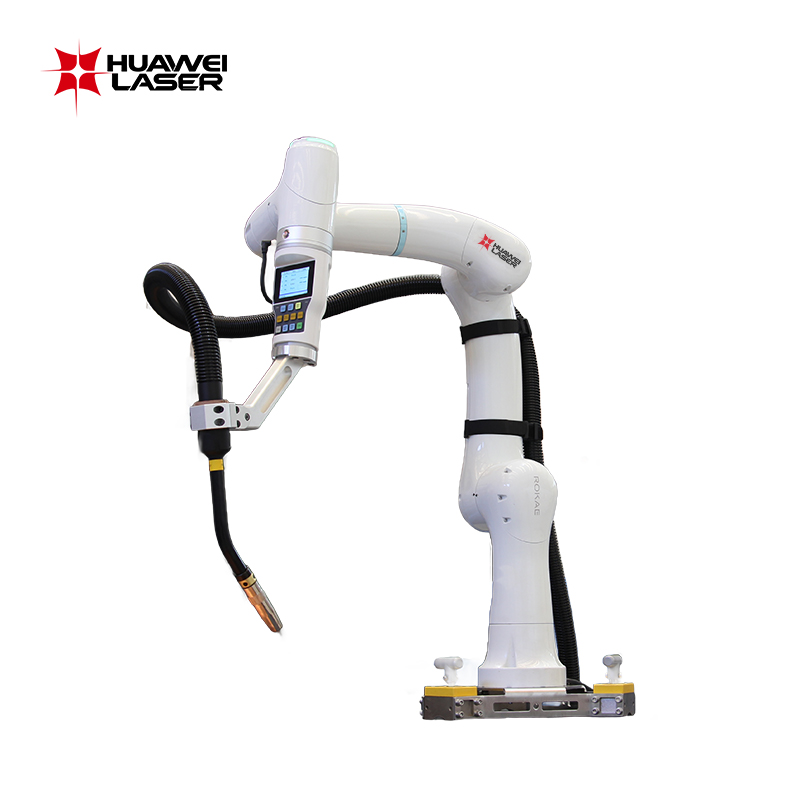
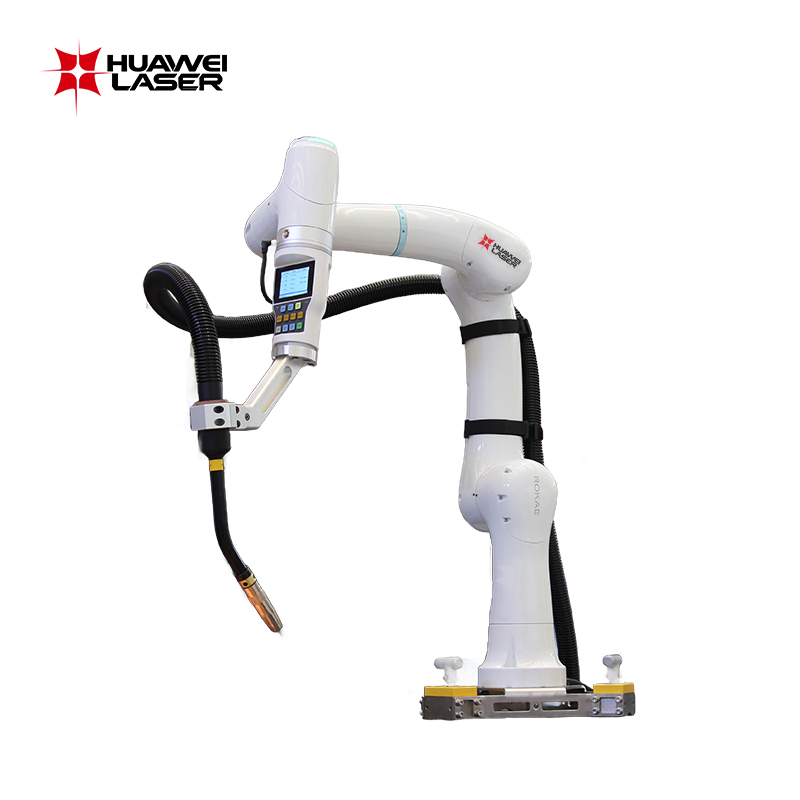
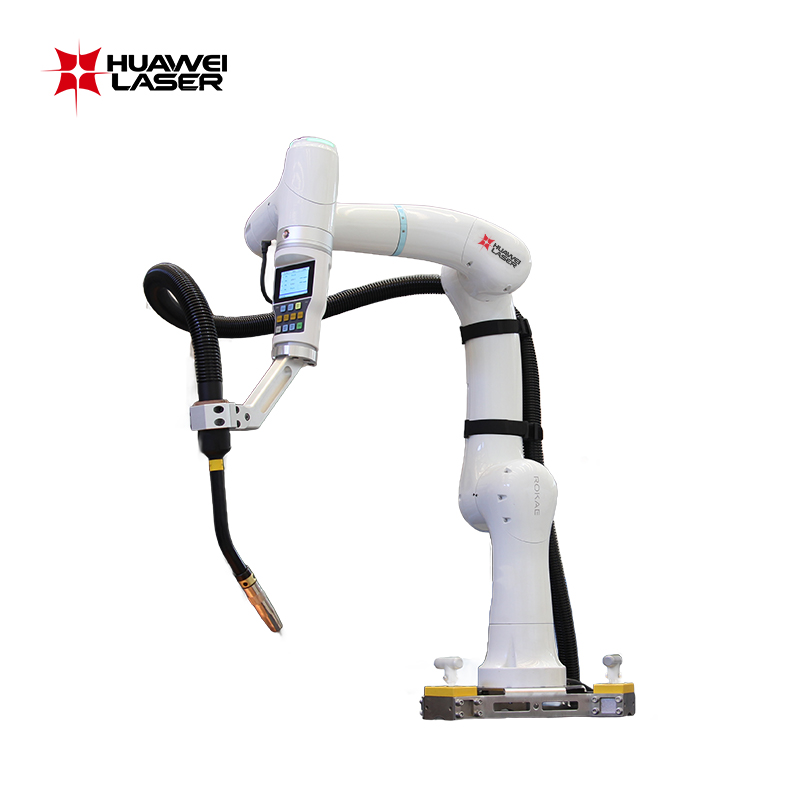
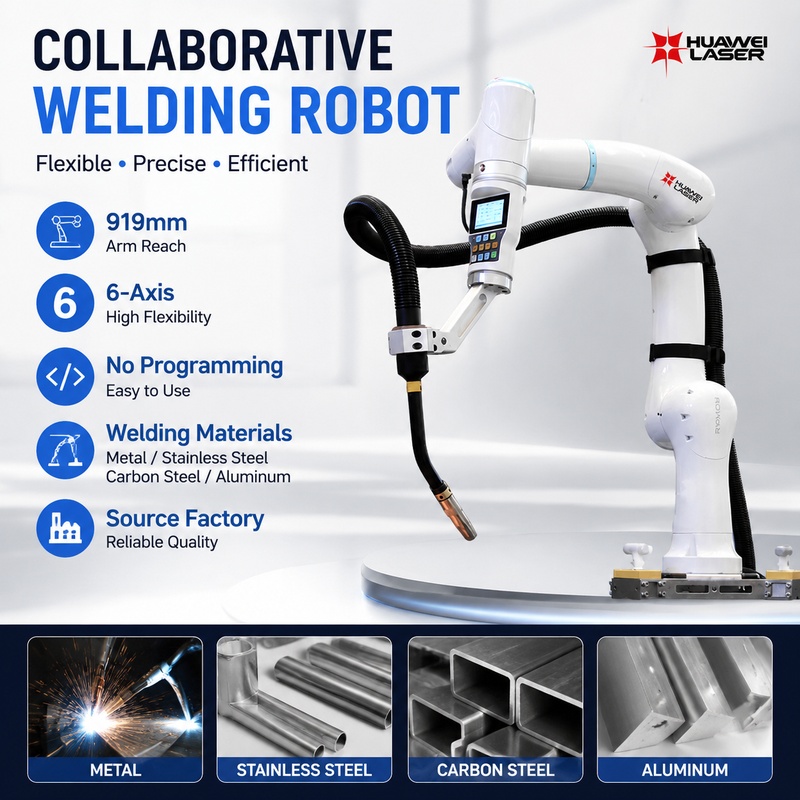
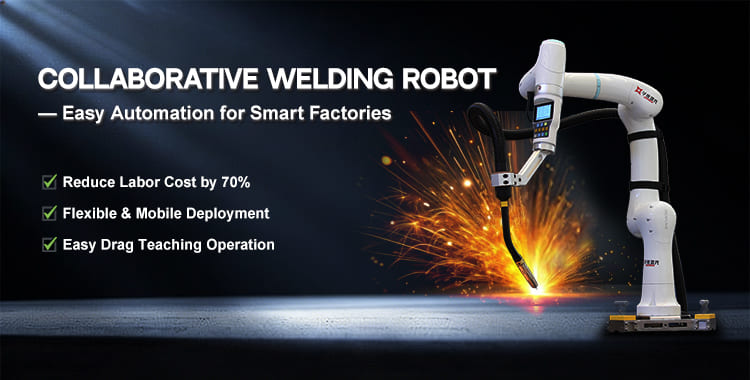
Automatic Welding Robot for Steel Structure Manufacturing from Huawei Laser is an intelligent robotic welding solution designed for steel structures and metal fabrication. With six-axis motion, precise trajectory control and hand-guided teaching, it helps manufacturers improve welding consistency while simplifying programming and operation.
Send Inquiry
Product Description
The Automatic Welding Robot for Steel Structure Manufacturing from Huawei Laser is designed for manufacturers that need more consistent welding quality, flexible production and easier operation when processing steel structures and metal components.
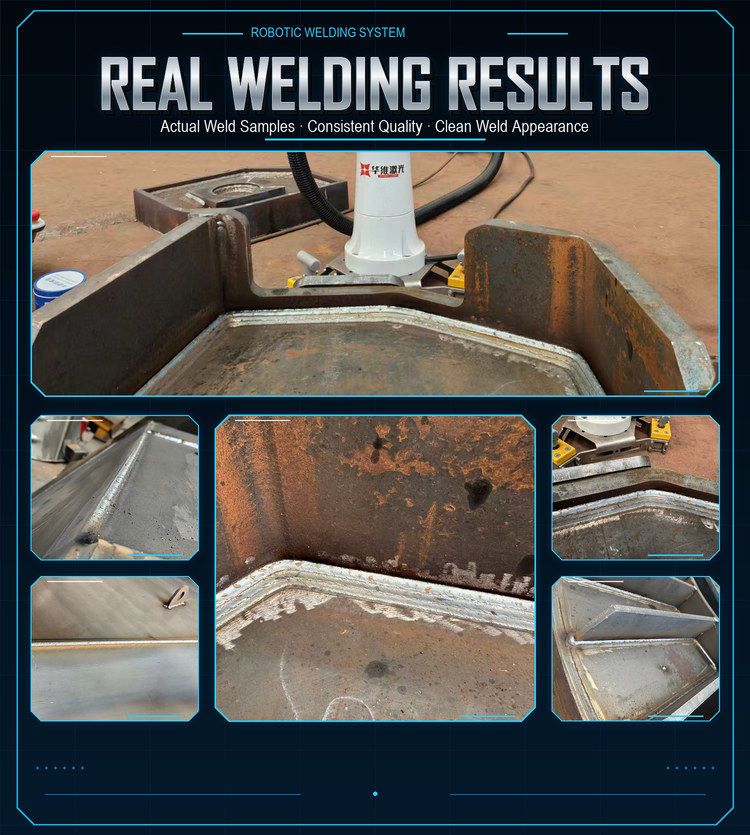
Manual welding can become difficult to maintain consistently when production involves repeated weld paths, different workpiece positions or larger structural components. A robotic welding system uses programmed robot movement to control the welding trajectory, helping reduce variations caused by manual operation.
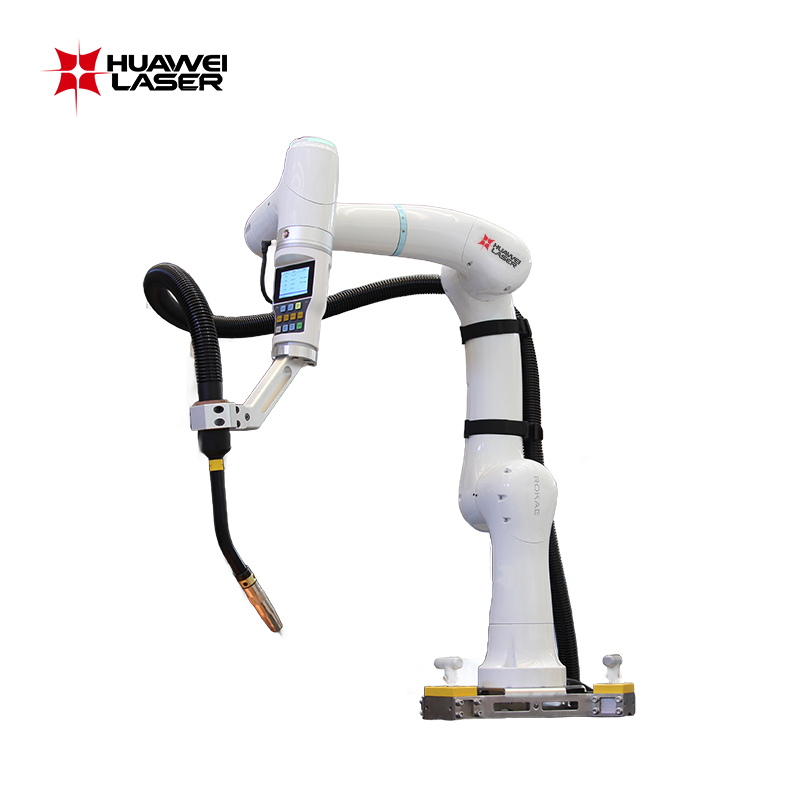
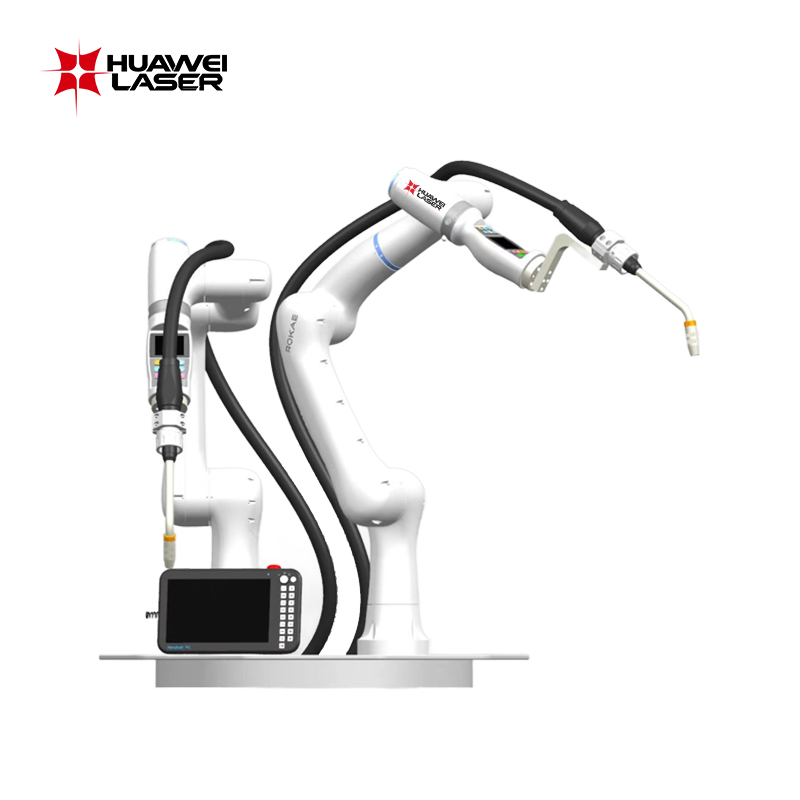
The system combines a six-axis robot arm, MIG welding equipment, intelligent control system and teaching functions into an integrated welding solution. Operators can use hand-guided teaching to record welding paths, reducing the complexity of creating programs for different workpieces.
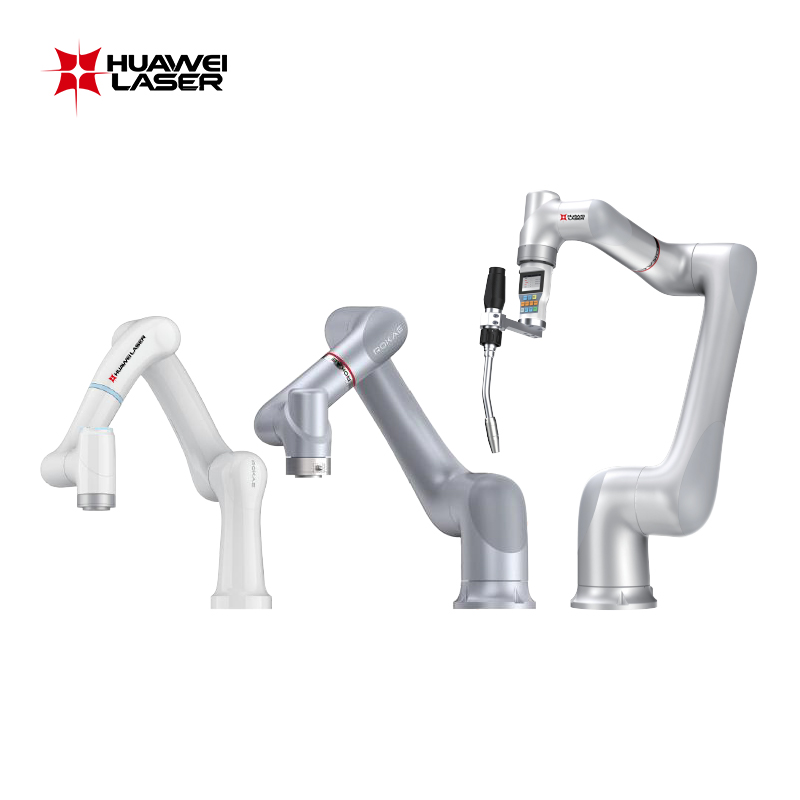
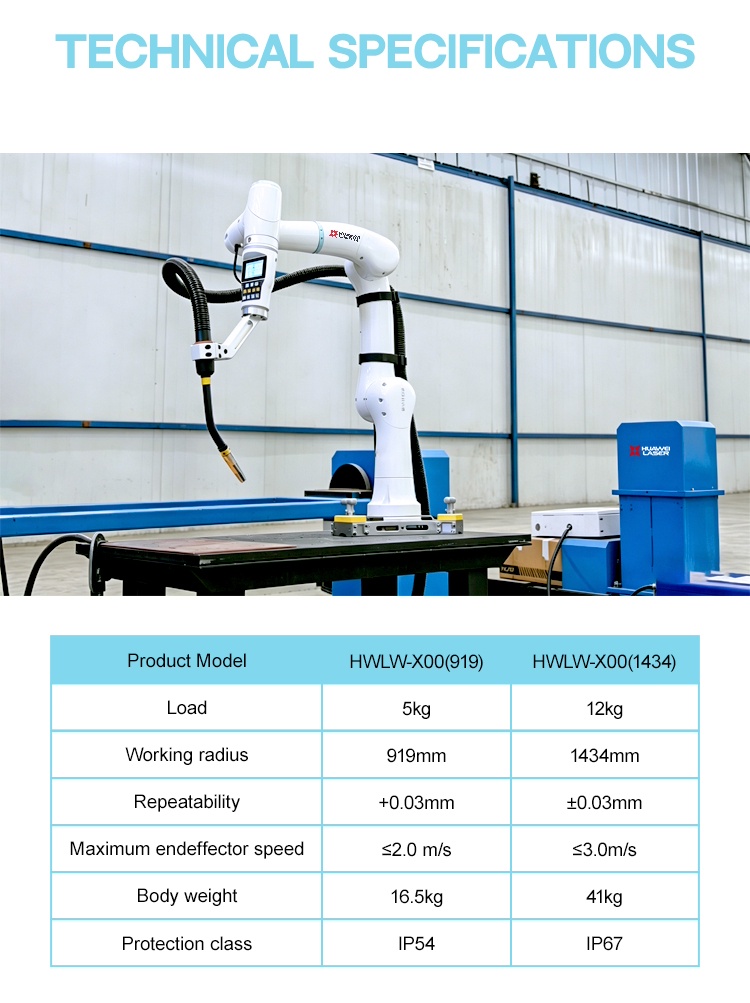
Two robot configurations are available. The 919mm model with 5kg payload is designed for small and medium workpieces, while the 1434mm model with 12kg payload provides greater reach and load capacity for medium and large components.
For steel structure manufacturers, this combination of flexible reach, repeatable movement and simplified programming provides a practical way to introduce welding automation into different production environments.
Product Advantages
1. Six-Axis Motion for Flexible Steel Structure Welding
The welding robot uses a six-axis robot arm, providing multi-directional movement for different welding positions and component structures.
With six-axis movement, the welding torch can change its orientation while following programmed welding paths, making the system suitable for components that require welding from multiple angles.
Key Benefits:
Six-axis robotic movement
Multi-angle welding capability
Flexible torch positioning
Suitable for complex welding paths
Better accessibility around structural components
The six-axis configuration provides the movement flexibility required for different steel structure welding tasks.
2. Two Robot Configurations for Different Workpiece Sizes
Huawei Laser provides two robot arm configurations:
| Model | Payload | Working Radius | Repeatability | Maximum Tool Speed | Robot Weight |
| HW-X00-919 | 5kg | 919mm | ±0.02mm | ≤2.0m/s | 16.5kg |
| HW-X00-1434 | 12kg | 1434mm | ±0.02mm | ≤3.0m/s | 41kg |
The 919mm model is suitable for small and medium workpieces, while the 1434mm model provides a longer working radius and higher 12kg payload for medium and large workpieces.
This allows manufacturers to select the robot according to the size and layout of their steel structure production.
3. ±0.02mm Repeatability for Consistent Welding Paths
Both robot configurations provide a repeatability of ±0.02mm.
During automatic welding, the robot follows programmed movement trajectories and maintains consistent torch positioning according to the welding program.
Key Benefits:
±0.02mm repeatability
Consistent programmed movement
Stable welding trajectory
Reduced variation between repeated operations
Suitable for repeat production
The repeatability specification provides measurable support for consistent robotic welding movement.
4. Hand-Guided Teaching for Easier Programming
The robotic welding system incorporates force control and torque sensing technology to support hand-guided teaching.
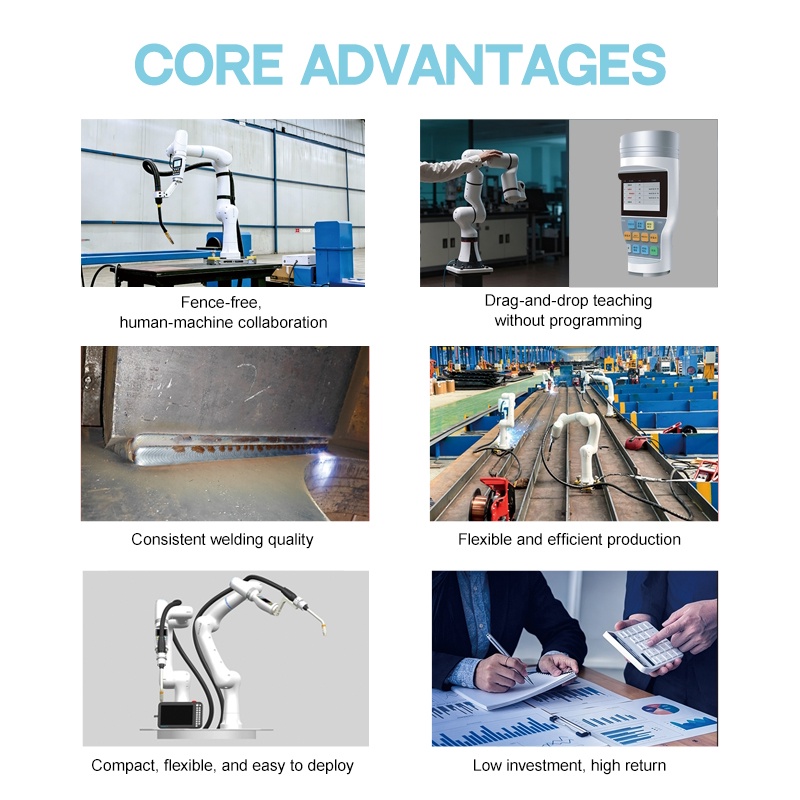
Instead of relying entirely on complicated manual programming, the operator can guide the robot arm along the required welding path and record the movement.
Key Benefits:
Hand-guided teaching
Faster program creation
Easier welding path adjustment
Lower programming complexity
Suitable for different workpieces
This function is particularly useful for steel structure manufacturers handling customized products or changing welding requirements.
5. Flexible Welding Automation for Different Production Environments
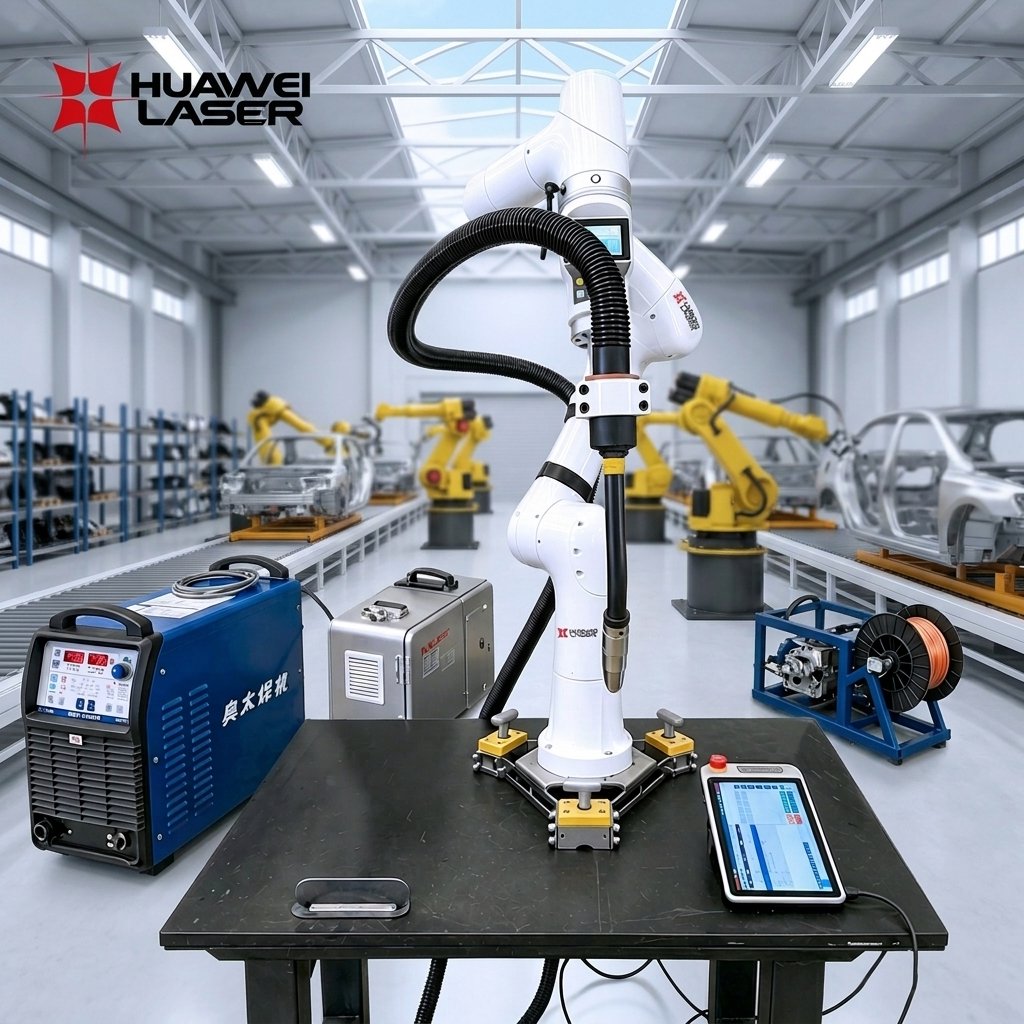
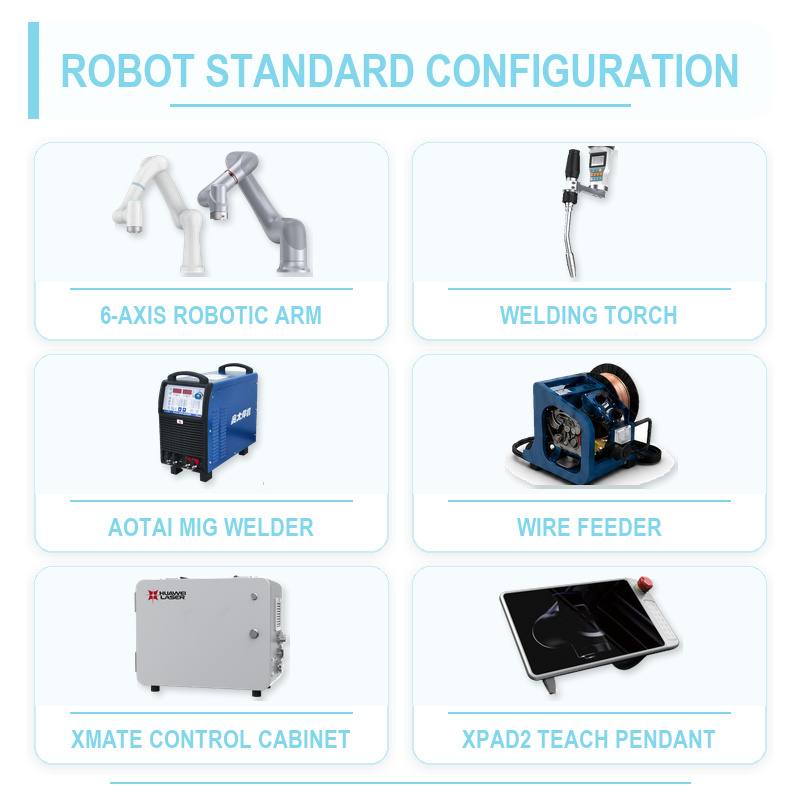
The system integrates the robot arm, welding equipment, wire feeder, control cabinet and teach pendant into a complete robotic welding solution.
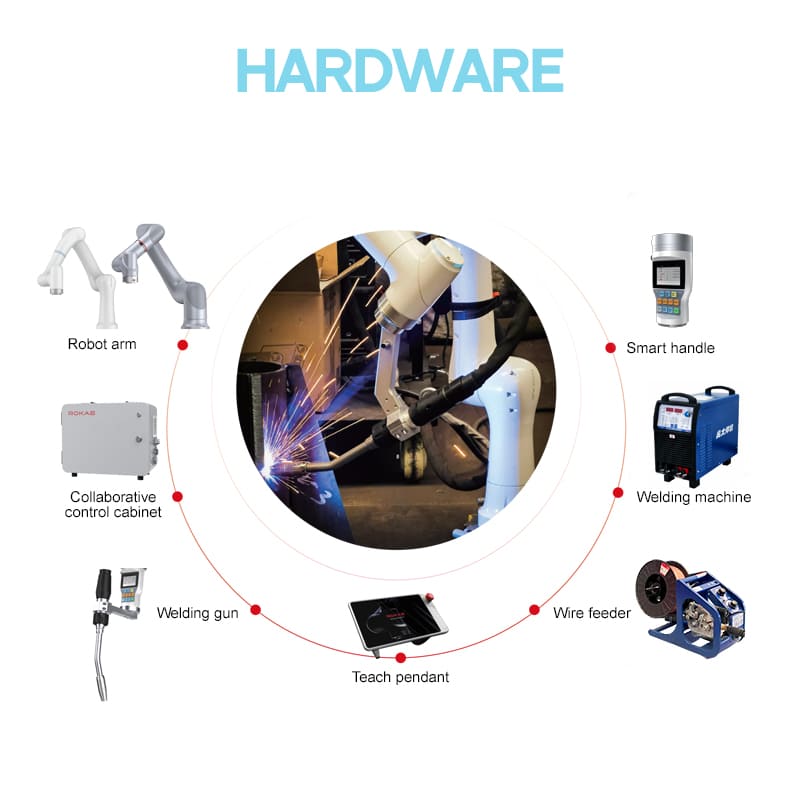
Optional configurations such as a mobile trolley, magnetic base, linear track and gantry system allow the equipment to be adapted to different workstation layouts.
Available Options:
Magnetic Base — Quick installation
Mobile Trolley — Easy workstation movement
Linear Track — Extended working range
Gantry System — Large-scale welding applications
Laser Sensor — Automatic seam tracking
Smart Handle — Fast hand-guided programming
These options allow the welding system to be configured according to different steel structure manufacturing environments.
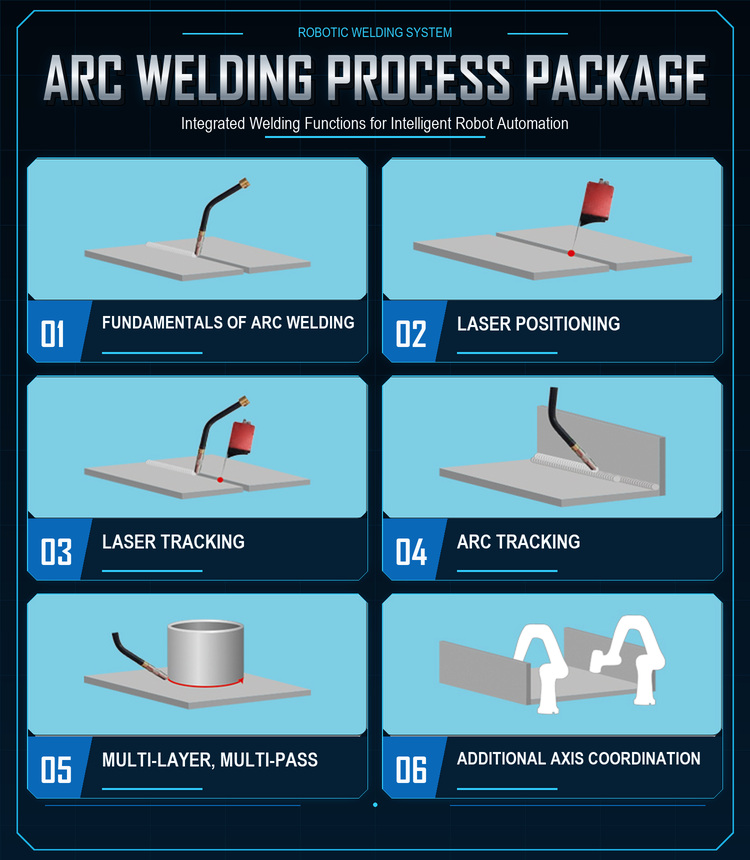
Robotic Welding Process
The Automatic Welding Robot for Steel Structure Manufacturing executes welding operations through programmed robotic movement.
During operation, the robot follows the preset welding trajectory while controlling torch positioning and movement.
The system supports MIG welding as the standard welding process. Depending on production requirements, additional process functions can be configured.
Basic Arc Welding
The robot performs standard MIG arc welding according to programmed welding paths.
Laser Positioning
Laser positioning can be used to locate welding seams before welding operations.
Laser Seam Tracking
A laser sensor can detect welding seam deviation and adjust the robot trajectory.
Arc Tracking
Arc tracking uses welding current and voltage feedback to assist torch movement.
Multi-Layer & Multi-Pass Welding
The system supports multiple welding layers and passes for applicable thicker-section welding tasks.
External Axis Coordination
The robot can coordinate with positioners or other external axes for more complex welding operations.
Steel Structure Manufacturing Applications
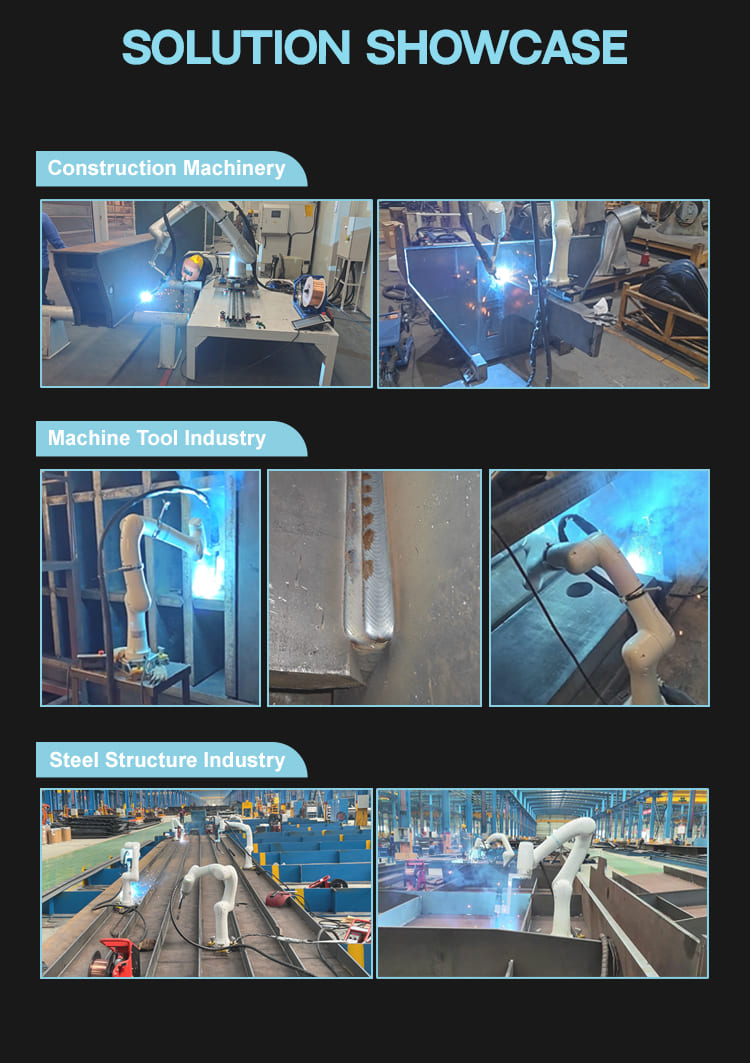
Steel Structure Fabrication
The Automatic Welding Robot for Steel Structure Manufacturing is designed for welding structural metal components that require repeatable welding paths and flexible torch positioning.
Applications:
Steel frames
Structural components
Steel assemblies
Fabricated steel parts
Heavy metal structures
The 1434mm model with a 12kg payload and 1434mm working radius provides greater reach for larger structural components.
Construction Machinery
The robotic welding system can be used for welding metal structures and components used in construction machinery manufacturing.
Applications:
Machine frames
Structural components
Equipment assemblies
Heavy metal parts
The six-axis robot provides flexible torch positioning for different welding orientations.
Machinery Manufacturing
The system is suitable for machinery manufacturers producing repeated metal components and assemblies.
Applications:
Machine frames
Equipment structures
Mechanical components
Metal assemblies
Hand-guided teaching also allows welding programs to be adjusted for different products.
Agricultural Equipment
The welding robot can be applied to agricultural equipment manufacturing where metal frames and structural components require repeated welding.
Applications:
Agricultural machinery frames
Metal structures
Equipment components
Fabricated assemblies
Pipe & Metal Fabrication Workshops
The flexible robotic system can also support welding applications in machinery contractors and pipe fabrication workshops.
Optional external-axis coordination and positioning systems can be configured for applications requiring additional movement capability.
Product Specifications
| Item | HW-X00-919 | HW-X00-1434 |
| Robot Type | Six-Axis Welding Robot | Six-Axis Welding Robot |
| Payload | 5kg | 12kg |
| Working Radius | 919mm | 1434mm |
| Repeatability | ±0.02mm | ±0.02mm |
| Maximum Tool Speed | ≤2.0m/s | ≤3.0m/s |
| Robot Weight | 16.5kg | 41kg |
| Standard Welding Process | MIG Welding | MIG Welding / Heavy Welding |
| Suitable Workpieces | Small & Medium | Medium & Large |
FAQ
1. Is the welding robot difficult to program?
The system supports hand-guided teaching, allowing operators to guide the robot arm and record welding paths, reducing programming complexity.
2. What welding process does the robot use?
The standard configuration supports MIG welding. The 1434mm configuration also supports heavy welding applications.
3. What materials can the welding robot process?
The system is suitable for carbon steel, stainless steel and other metal fabrication materials according to the configured welding process.
4. Can the welding robot be used for large steel structures?
Yes. The 1434mm model provides a 12kg payload and 1434mm working radius, making it suitable for medium and large workpieces.
5. Can the robot support seam tracking?
Yes. A laser sensor can be configured for automatic welding seam tracking.
6. Can the welding robot be moved between workstations?
Yes. Optional mobile trolley and magnetic base configurations are available for flexible workstation deployment.
Contact Huawei Laser
Upgrade Your Steel Structure Welding Process
The Automatic Welding Robot for Steel Structure Manufacturing provides a flexible automation solution for manufacturers looking to improve welding consistency and simplify robotic welding operation.
With six-axis movement, ±0.02mm repeatability, 919mm/1434mm working radius options and hand-guided teaching, Huawei Laser provides robotic welding solutions for steel structures, machinery, agricultural equipment and customized metal fabrication.
Contact Huawei Laser today to discuss your welding requirements and find the right robotic welding solution for your production.

Hot Tags: Automatic Welding Robot for Steel Structure Manufacturing, China, Manufacturer, Supplier, Wholesale, Factory, Customized, Price
Product Tag
Related Category
Sheet Metal Laser Cutting Machine
Tube Metal Laser Cutting Machine
Handheld Laser Welding Machine
Sheet Tube Laser Cutting Machine
H-Shaped Steel Laser Cutting Machine
Handheld Laser Cleaning Machine
Welding Robot
Send Inquiry
Please feel free to give your inquiry in the form below. We will reply you in 24 hours.
Related Products