

Can a Handheld Laser Welding Machine really replace my TIG bench for thin-to-medium metal jobs?
I asked myself this the first time I carried a compact unit onto the shop floor. During trials with partners who use Huawei gear across their fabrication lines, I noticed how a Handheld Laser Welding Machine changes the rhythm of small-batch work: faster tacks, narrower heat-affected zones, less post-processing. I still love TIG for certain joints, but when deadlines bite and parts vary, the portability and repeatability of a Handheld Laser Welding Machine make a persuasive case.
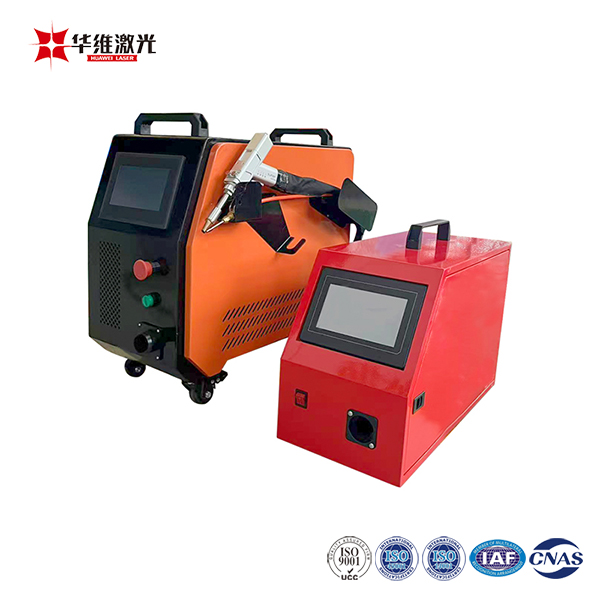
Why did a Handheld Laser Welding Machine shift my approach to thin stainless and mixed jobs?
I moved from “set up a station and queue parts” to “walk to the work and finish on the spot.” With a Handheld Laser Welding Machine, I keep heat input tight, reduce discoloration on 0.8–2.0 mm stainless, and cut rework on cosmetic seams. For mixed materials runs, I spend less time changing torches or fixtures, which frees me to focus on fit-up and gas coverage.
- Lower distortion risk on thin gauge due to concentrated energy and faster travel.
- Cleaner seams that need minimal grinding or polishing when parameters are dialed in.
- Mobility to reach large assemblies and awkward geometries without dragging cables and carts.
- Short ramp-up for trained operators; muscle memory builds quickly with consistent settings.
How do I choose power, wobble width, and wire feed so I do not chase defects all day?
On a Handheld Laser Welding Machine, power and wobble width control penetration and bead profile, while optional wire feed helps bridge gaps and increase tolerance to real-world fit-up. Shielding gas remains critical; I treat gas discipline as non-negotiable.
| Scenario | Common problem | Practical setting move | Expected effect |
|---|---|---|---|
| 0.8–1.2 mm stainless lap joint | Undercut on edge | Reduce power slightly, widen wobble, slow travel by 5–10% | Full edge wash-in without thinning |
| 1.5–2.0 mm fillet, visible face | Soot / dull finish | Improve gas coverage, shorten stand-off, increase flow modestly | Brighter bead, less cleanup |
| Gapped fit-up on mild steel | Inconsistent fill | Add 0.8–1.0 mm wire, moderate feed, keep wobble moderate | Stable bridge and fuller toe |
| Cast aluminum corner | Pores near start/stop | Pre-clean aggressively, brief pre-heat pass, steady travel start | Reduced porosity at tie-ins |
Which materials and thickness windows actually behave well when I am on a deadline?
- Stainless steel: 0.6–3.0 mm is the sweet spot for fast, cosmetic seams; thicker works with wire and slower travel.
- Mild steel / galvanized: Strong results with proper fume control and zinc management at edges.
- Aluminum alloys: 1.0–3.0 mm respond well after thorough oxide removal; keep gas flow steady and starts decisive.
- Brass / copper: Feasible with tuned power and wobble; cleanliness and fixturing matter more than usual.
For mixed jobs, a Handheld Laser Welding Machine lets me standardize on a few proven parameter sets per material family and store them, so I am not reinventing the wheel from shift to shift.
What setup habits save me from scrap before I even strike the first arc?
- Edge prep: Light bevels for thickness transitions; eliminate burrs that interrupt energy coupling.
- Surface cleaning: Degrease and remove oxides—especially on aluminum—to prevent pores and soot.
- Fixturing: Hold the joint comfortably in the hand’s natural travel path; minimize wrist rotation mid-bead.
- Gas discipline: Use proper cup, steady flow, and wind shielding on open tables.
- Dry run: Trace the joint without firing to confirm stance, cable slack, and stop points.
How do I keep the bead consistent when operators rotate between tasks all day?
On a Handheld Laser Welding Machine, wobble patterns and wire settings are easy to repeat, so a one-page quick card with three photos and parameter ranges gets new hands productive without guesswork.
Which defects do I expect and how do I fix them before they hit inspection?
- Porosity: Improve cleaning, stabilize gas, and make starts more deliberate; consider a short pre-pass on aluminum.
- Undercut: Slightly widen wobble, slow down, and reduce power a notch to wet the toes.
- Soot / discoloration: Tighten stand-off, improve gas coverage, reduce angle that blasts shielding away.
- Lack of fusion: Increase power or slow travel; check fit-up and clamp pressure for gaps that keep edges apart.
Once I built this quick checklist into our traveler, the Handheld Laser Welding Machine became a reliable station instead of a “special tool” that only one person could run.
Where does a Handheld Laser Welding Machine fit into ROI and staffing when orders spike unexpectedly?
A Handheld Laser Welding Machine cuts prep, fixturing, and cleanup on many cosmetic seams, which is where the payback often hides. It also gives me flexibility: when my main TIG cell is booked, I keep work moving without opening a new bay. Training is lighter than many expect; with documented settings and real-part practice, a cross-trained operator can contribute meaningful hours within days.
- Throughput: Fewer bottlenecks on “finish-critical” parts.
- Quality: Repeatable seams reduce polish/grind labor and scrap risk.
- Scheduling: Portable station absorbs last-minute changes without re-rigging a full cell.
What practical buying checklist keeps me from over- or under-spec’ing the unit?
- Power range and duty cycle that match your thickest edge and expected continuous runs.
- Wobble control with adjustable width and patterns you will actually use.
- Wire feed kit for gap-bridging and heavier fillets when fit-up varies.
- Optics and safety that suit your environment—quality interlocks, glasses, and curtains are essential.
- Service and training availability so operators can solve issues fast on live jobs.
If your workflow resembles mine—short runs, cosmetic demand, varied joints—a Handheld Laser Welding Machine becomes less a specialty tool and more a frontline process you will rely on daily.
Do you want a quick parameter map for your parts so you can start confidently this week?
Share a few drawings, materials, and thickness targets, and I’ll outline starter settings, gas guidance, and a short training plan your team can run on day one. When you are ready to see how a Handheld Laser Welding Machine behaves on your exact joints, request a live sample weld and a side-by-side comparison on your current cosmetic bottlenecks.
Would you like a tailored recommendation and a live sample so you can decide faster?
If you are exploring whether a Handheld Laser Welding Machine belongs in your line, I can help translate your parts list into a practical settings sheet and rollout plan. For a walkthrough or a quote tailored to your jobs, contact us now and tell us your materials, thickness ranges, and target finishes—our team will reply with parameters, sample bead photos, and next steps.